30 Haircuts for Thin Hair for Women That Add Instant Volume
Thin hair can fall flat by lunch, show your part under bright light and refuse to hold a curl. The right haircut fixes more of that than any product. It puts weight where your hair needs it and lift where it collapses.
These 30 haircuts for thin hair run from short to long: pixies and crops first, then bobs, then lobs and shoulder cuts, and finally longer styles that still look full. Each one names the technique to ask for, so you can show your stylist the photo and the words.
Jump to a look (32)
- How to Choose a Haircut for Thin Hair
- 1. Feathered Pixie With Extra Length on Top
- 2. Side-Swept Pixie With a Long Fringe
- 3. Textured Crop With Choppy Ends
- 4. Tapered Cut for Fine Coils
- 5. Airy Bixie
- 6. Ear-Length French Bob With Bangs
- 7. Blunt Chin-Length Bob
- 8. Stacked Bob With a Tapered Nape
- 9. Angled Bob, Shorter in the Back
- 10. Soft Bob With Internal Layers
- 11. Wavy Bob With a Deep Side Part
- 12. Bob With Curtain Bangs
- 13. Short Shag With Feathery Crown Layers
- 14. Textured Bob With Babylights
- 15. Blunt Lob at the Collarbone
- 16. Lob With Face-Framing Pieces
- 17. Textured Lob With Bent Waves
- 18. Shoulder Cut With Long Soft Layers
- 19. Collarbone Shag
- 20. Shoulder-Length Cut With Flipped Ends
- 21. Medium Cut With Wispy Bangs
- 22. Mid-Length Cut With Side-Swept Bangs
- 23. Light Butterfly Layers
- 24. Long Hair With a Blunt Hemline
- 25. Long Cut With Face-Framing Layers Only
- 26. Long U-Shaped Hemline
- 27. Long Beach Waves With a Middle Part
- 28. Long Layers for Wavy Thin Hair
- 29. Long Hair With Full Blunt Bangs
- 30. Long Curly Cut With Rounded Layers
- How to Blow-Dry Thin Hair for Volume
How to Choose a Haircut for Thin Hair
- Know if your hair is fine, thin or both. Fine describes each strand: it has a small diameter and feels silky. Thin describes density, meaning fewer strands overall, so the scalp shows more easily. Many women have both, and the advice here works for either.
- Keep the ends blunt or nearly blunt. A solid perimeter makes hair look thicker at the bottom. Ask for point cutting to soften the line, not thinning shears or a razor, which leave ends wispy and see-through.
- Put layers inside, not on the surface. Short internal layers hidden under the top section push the hair up from underneath. Long surface layers cut from the crown can make thin hair look stringy.
- Choose length by your density. Thin hair usually looks fullest between the chin and the collarbone. Past the shoulders, it needs a blunt hemline to avoid looking sparse at the ends.
- Use light products at the root. A volumizing mousse or root spray on damp roots gives lift without weight. Skip heavy creams and oils on the lengths, or use one drop on the very ends.
- Plan on 5 to 15 minutes of styling. Most cuts here air dry well, but a quick blow-dry at the roots makes the biggest difference. The routine is near the end of this guide.
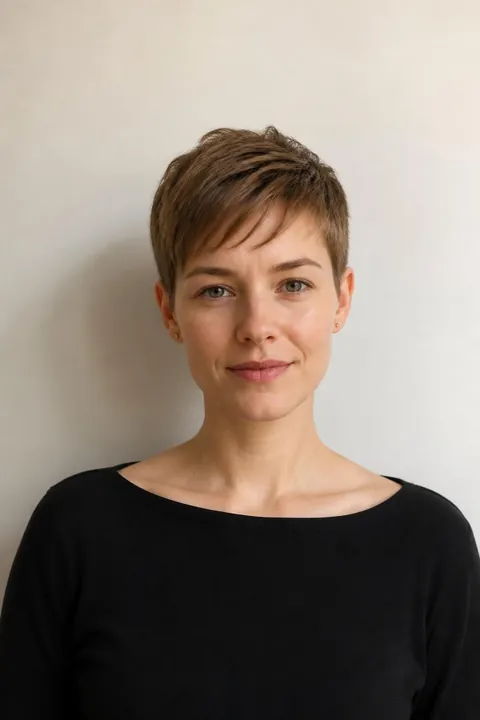
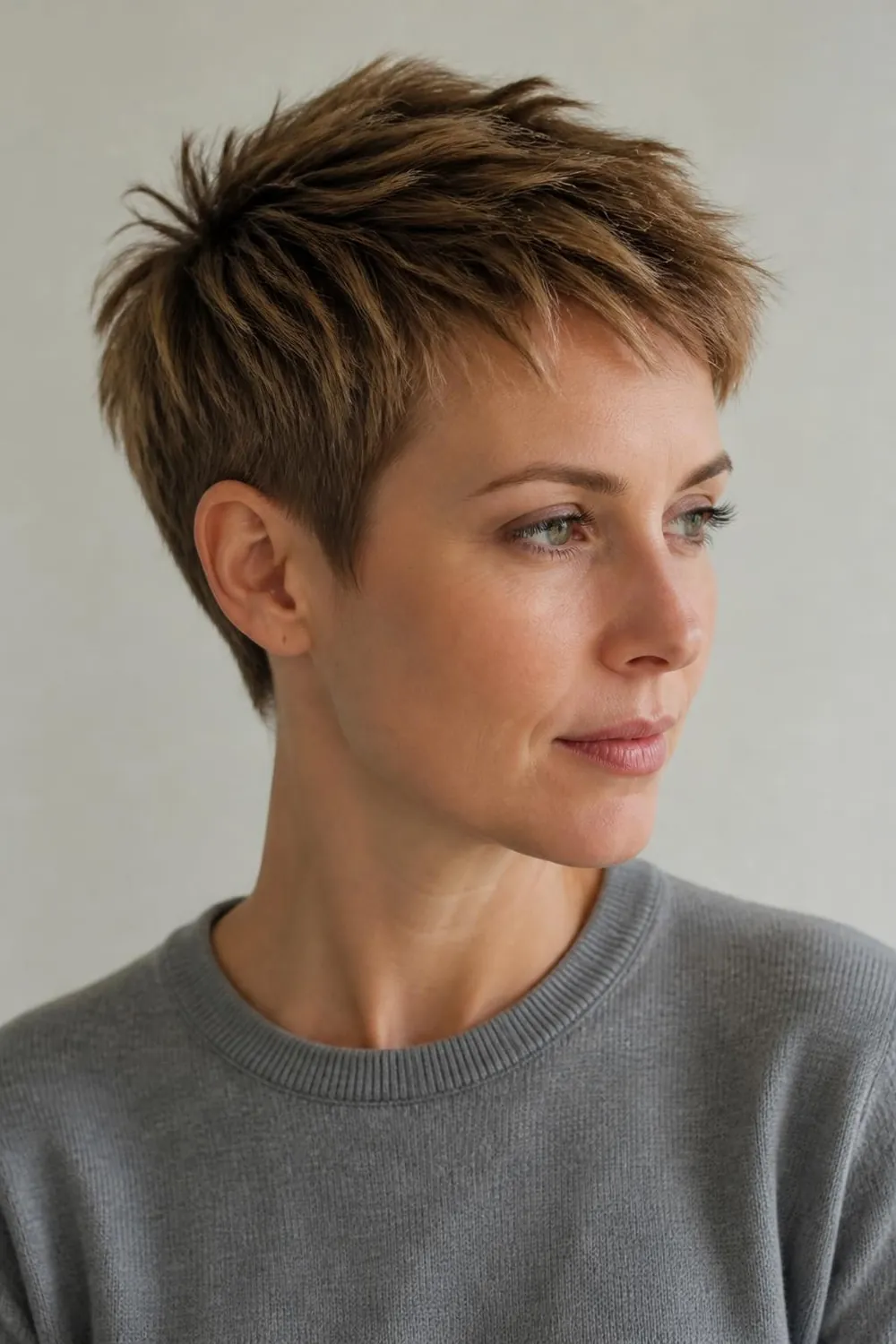
1. Feathered Pixie With Extra Length on Top
 Save
A pixie hides thin hair better than most people expect. With 2 to 3 inches left on top and the sides tapered close, the top has room to stand up and move.
Point cutting through the top makes the ends feather instead of sitting in a heavy line. A pea-sized dab of matte paste, worked in with your fingertips, keeps it piecey all day.
Styling time: 5 minutes.
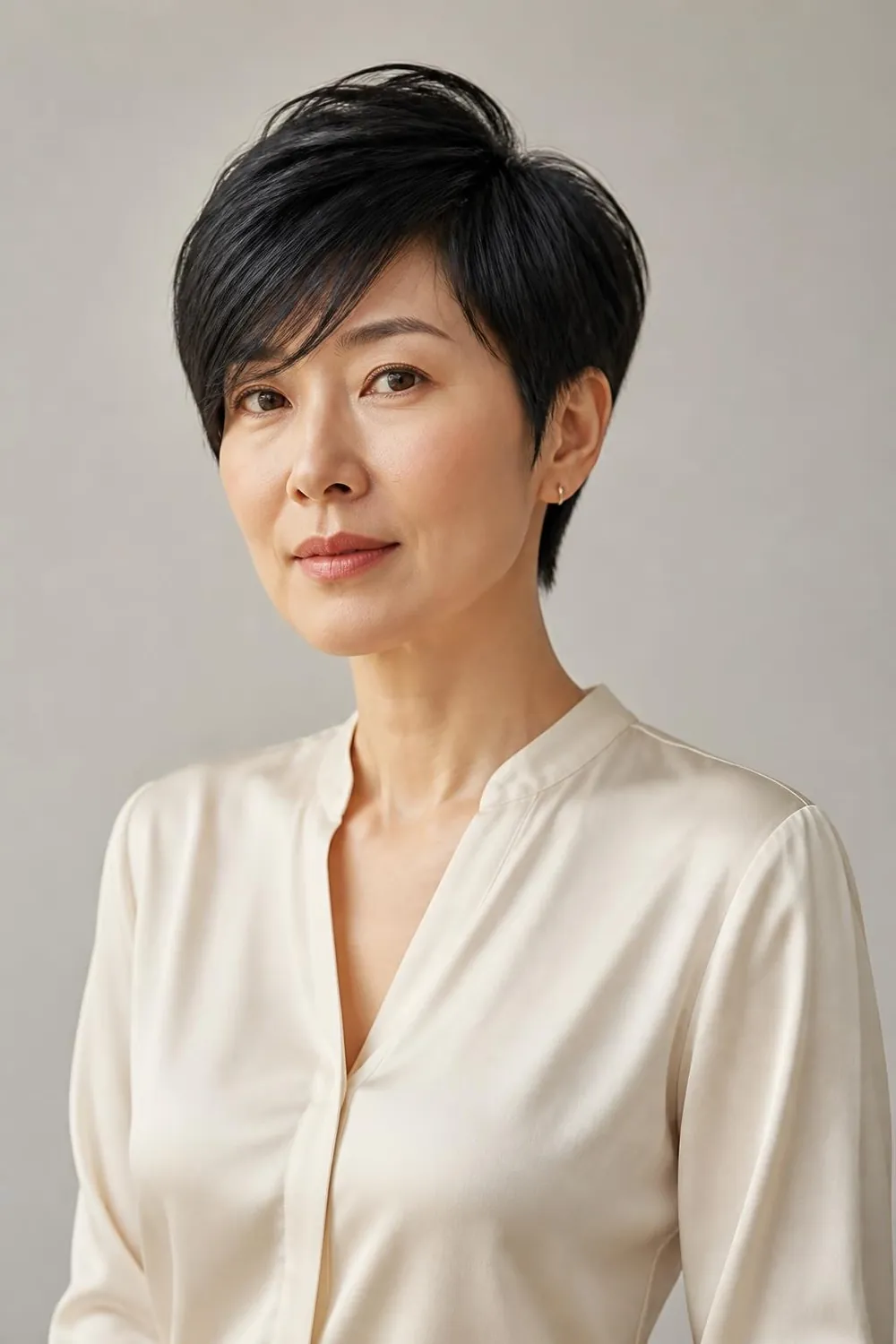
2. Side-Swept Pixie With a Long Fringe
 Save
Here the fringe does the work. It is cut 4 to 5 inches long and swept across the forehead, which softens the eyes and covers a sparse front hairline.
Blow-dry the fringe in the opposite direction first, then flip it back over. That one move gives the front more lift than any spray.
Best for: oval and heart-shaped faces, and anyone who likes a soft front.
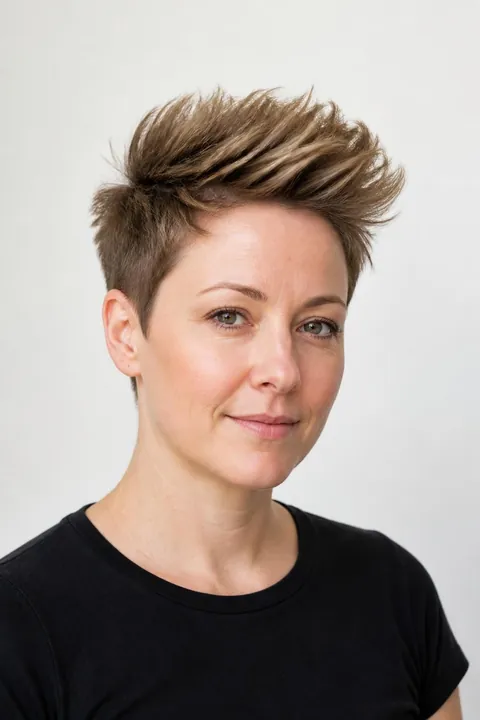
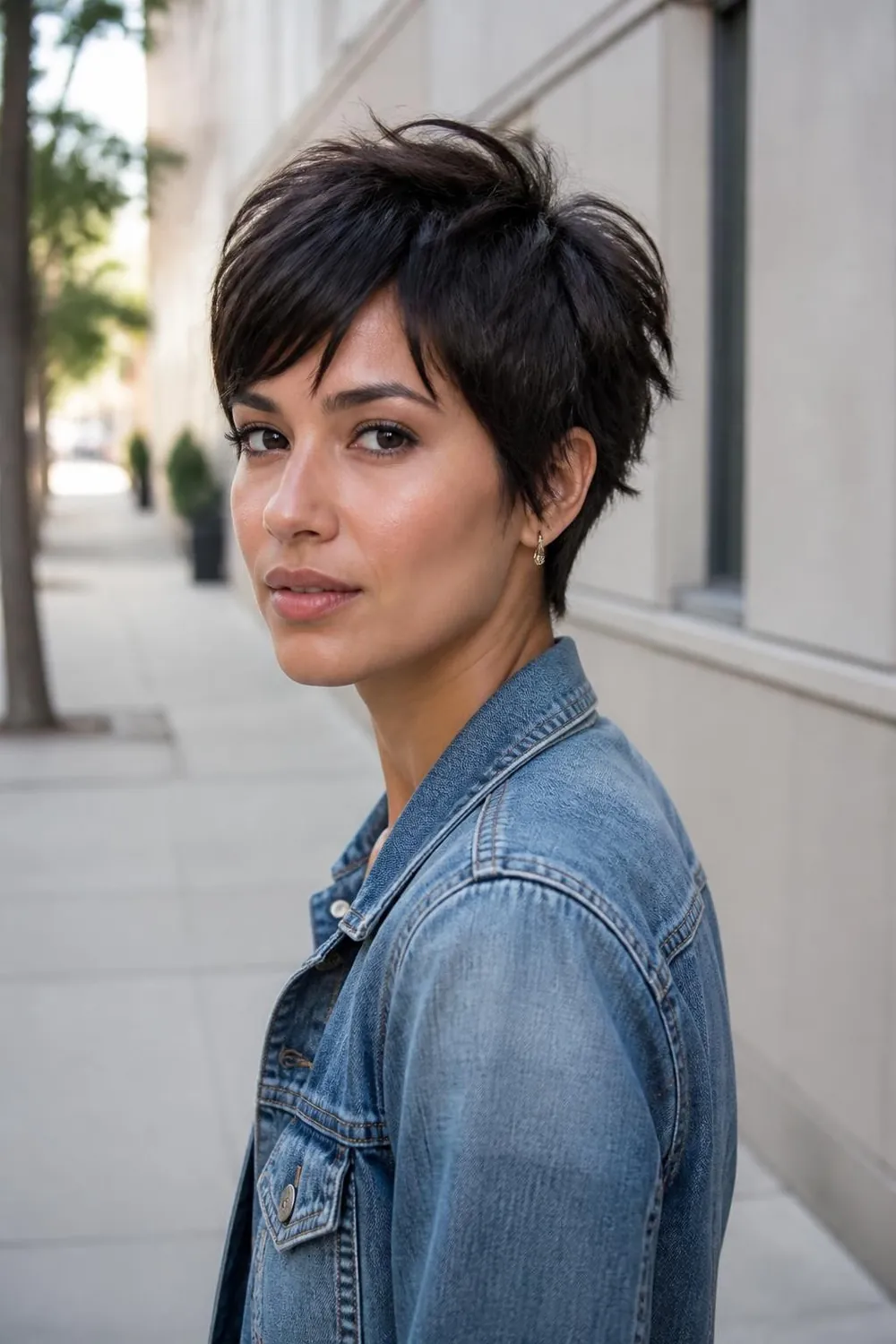
3. Textured Crop With Choppy Ends
 Save
A crop runs a touch longer than a classic pixie, with about 3 to 4 inches at the crown and choppy ends all over. Broken edges trick the eye into reading more hair.
Rough-dry it with your fingers, head tipped forward, until it is almost dry. Finish with a texture spray and leave it slightly messy.
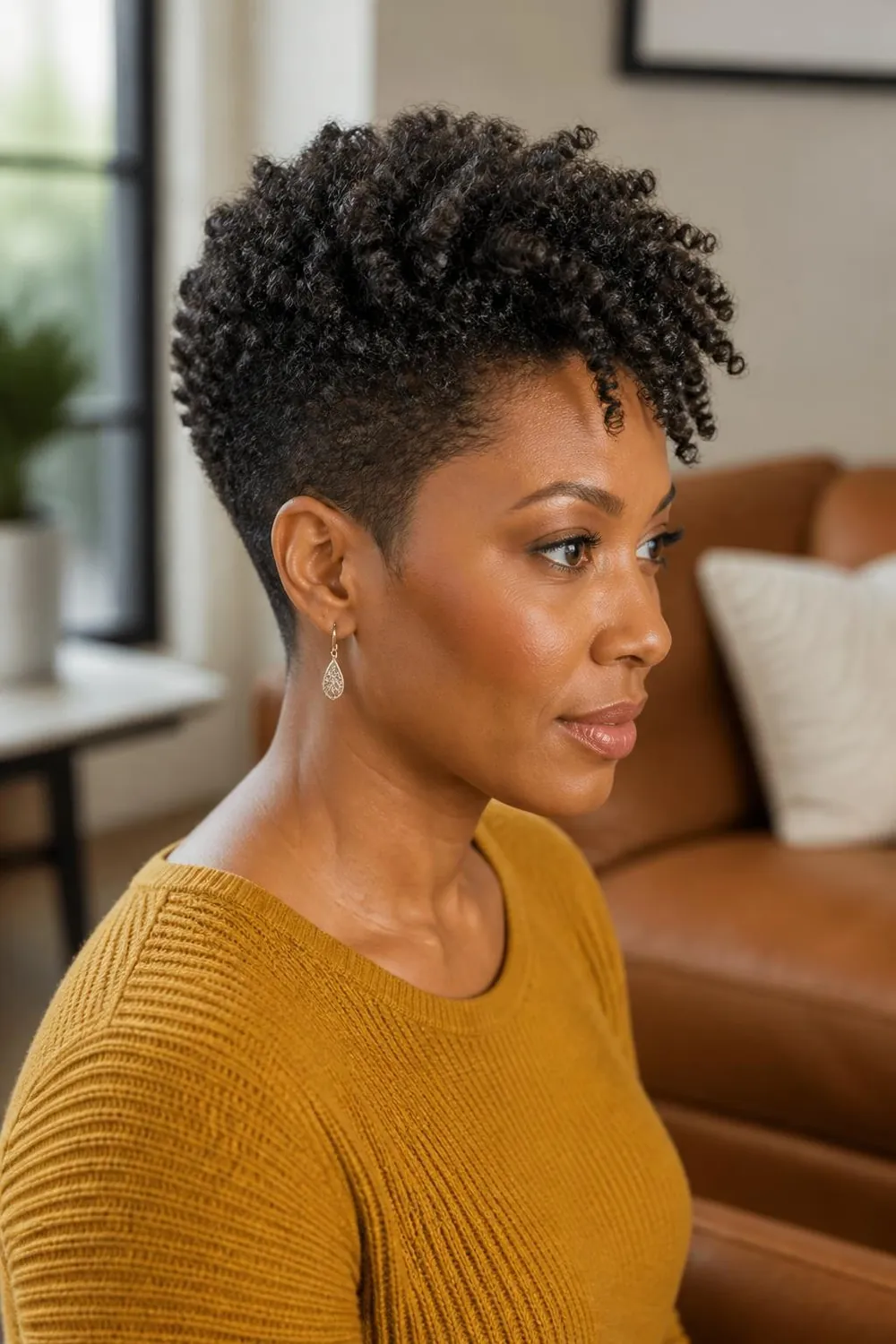
4. Tapered Cut for Fine Coils
 Save
Fine coily hair can look thin when it is grown long and stretched. A tapered cut keeps the sides and nape short and leaves 2 to 3 inches of coils on top, so the shape reads round and full.
Define the coils with a light curl custard and a splash of water. A wide-tooth pick at the roots adds height without breaking up the pattern.
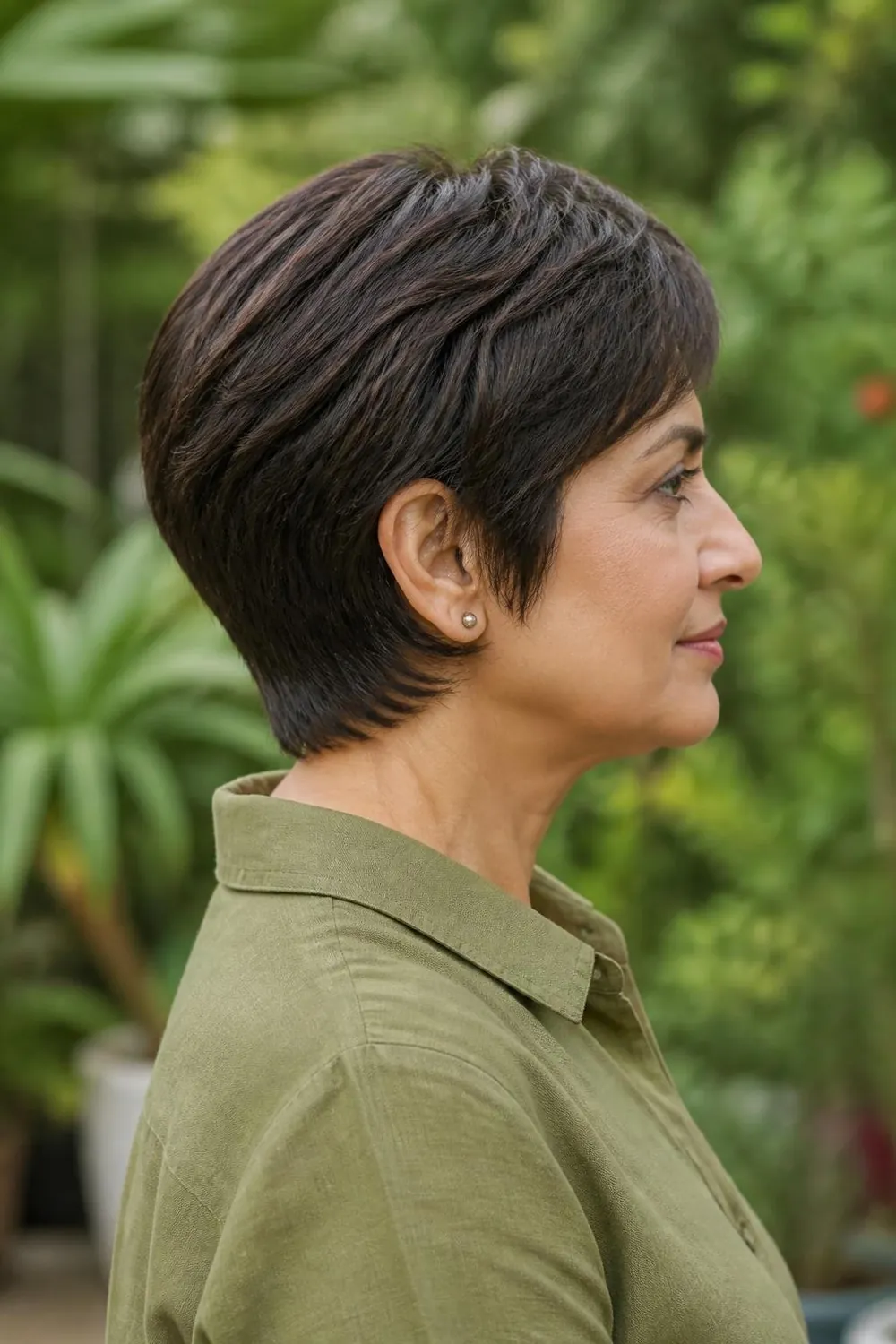
5. Airy Bixie
 Save
The bixie sits between a pixie and a bob: short at the nape, longer around the ears and soft at the crown. It suits thin hair that wants to grow out a pixie without the awkward stage.
Layers stay short and light on top, while the sides keep enough length to tuck. Expect a trim every 6 weeks to keep the shape crisp.
Ask your stylist for: a bixie with a tapered nape and soft, point-cut layers through the crown.
6. Ear-Length French Bob With Bangs
 Save
The French bob is short, blunt and slightly undone, ending near the earlobe with a fringe at brow level. Because the line is so short, nearly every strand reaches the edge, so it looks dense.
It air dries well on hair with a slight wave. On straight hair, a quick bend at the ends with a flat iron gives it that lived-in shape.
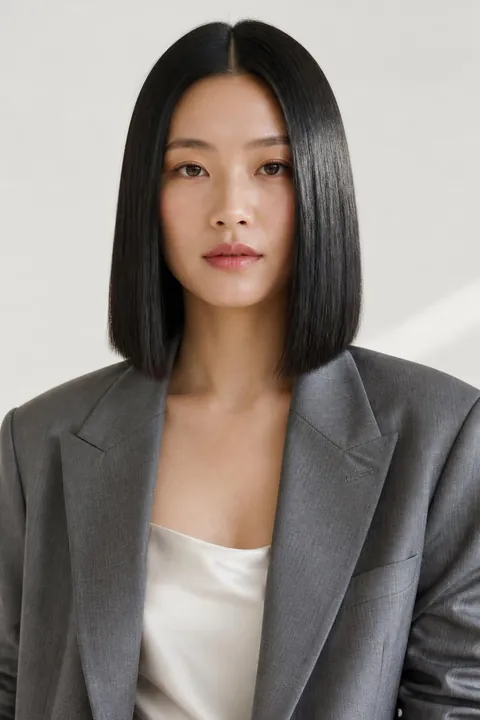
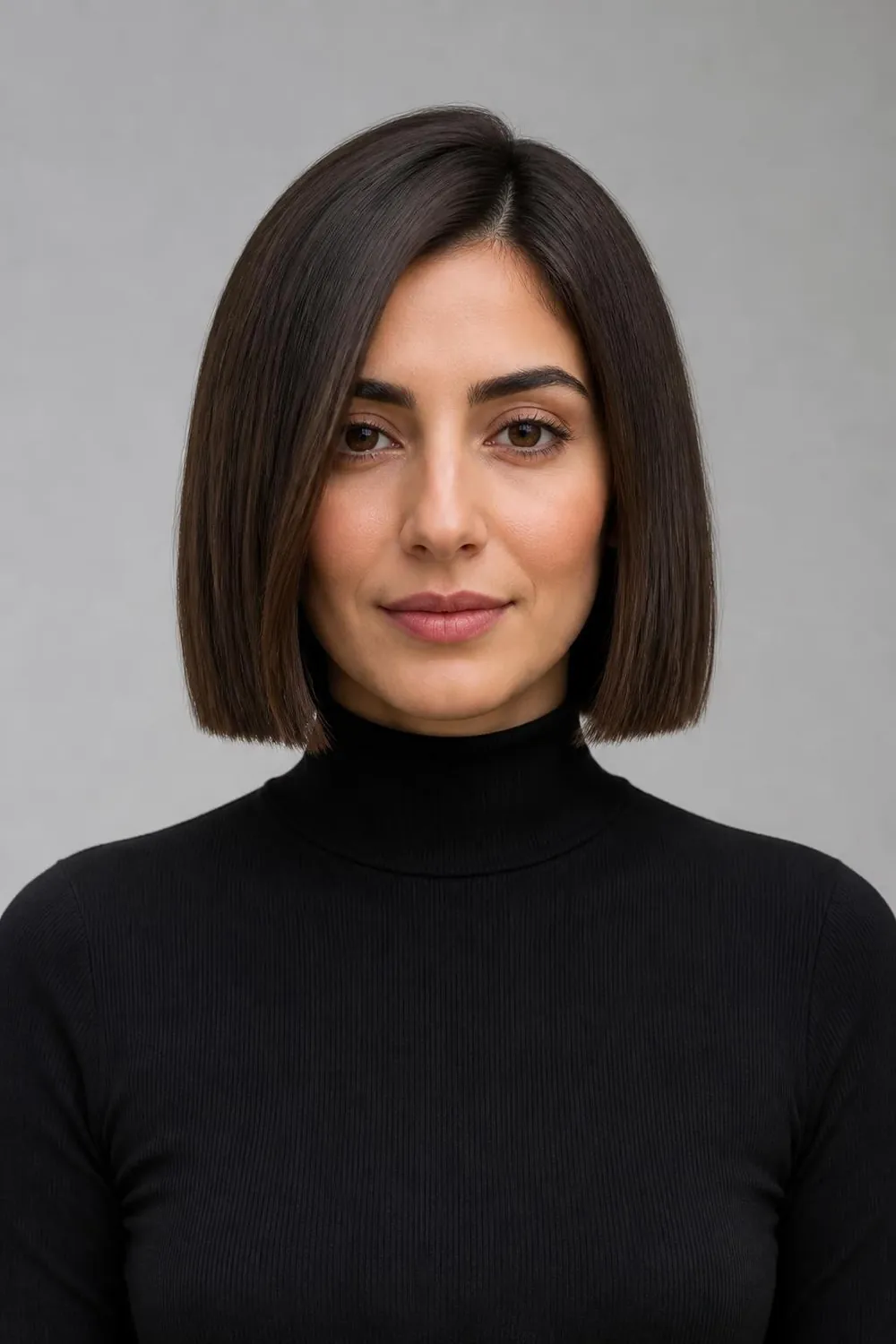
7. Blunt Chin-Length Bob
 Save
If you take one idea from this list, take this one: a blunt line makes thin hair look thicker. A chin-length bob cut to one length stacks all your hair at the bottom edge.
Request a dry check at the end of the cut, since fine hair can spring up a little once it dries. A center or slight side part keeps it modern.
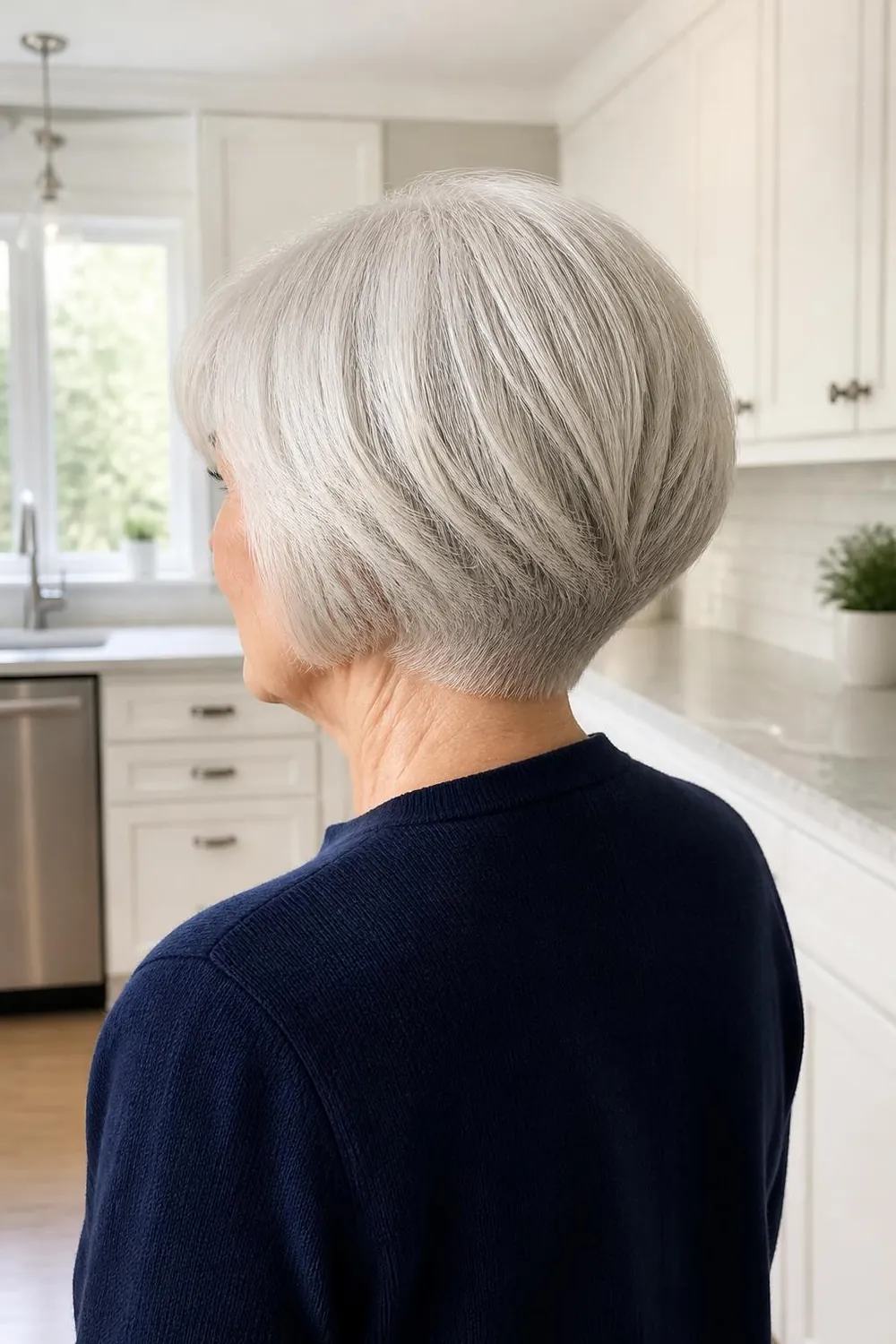
8. Stacked Bob With a Tapered Nape
 Save
Stacking builds short graduated layers at the back so the crown sits higher and rounder. The nape is tapered close to the neck, which keeps weight from dragging the shape down.
This cut needs a round brush at the back to look its best. Dry the crown up and forward, then smooth the sides down.
Styling time: 10 minutes.
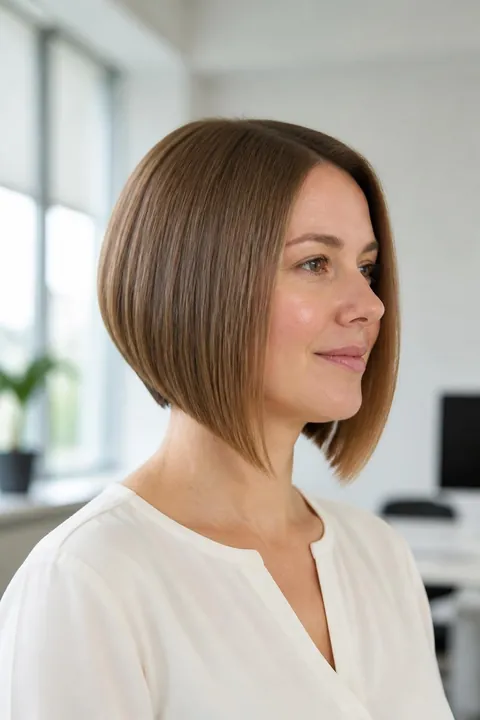
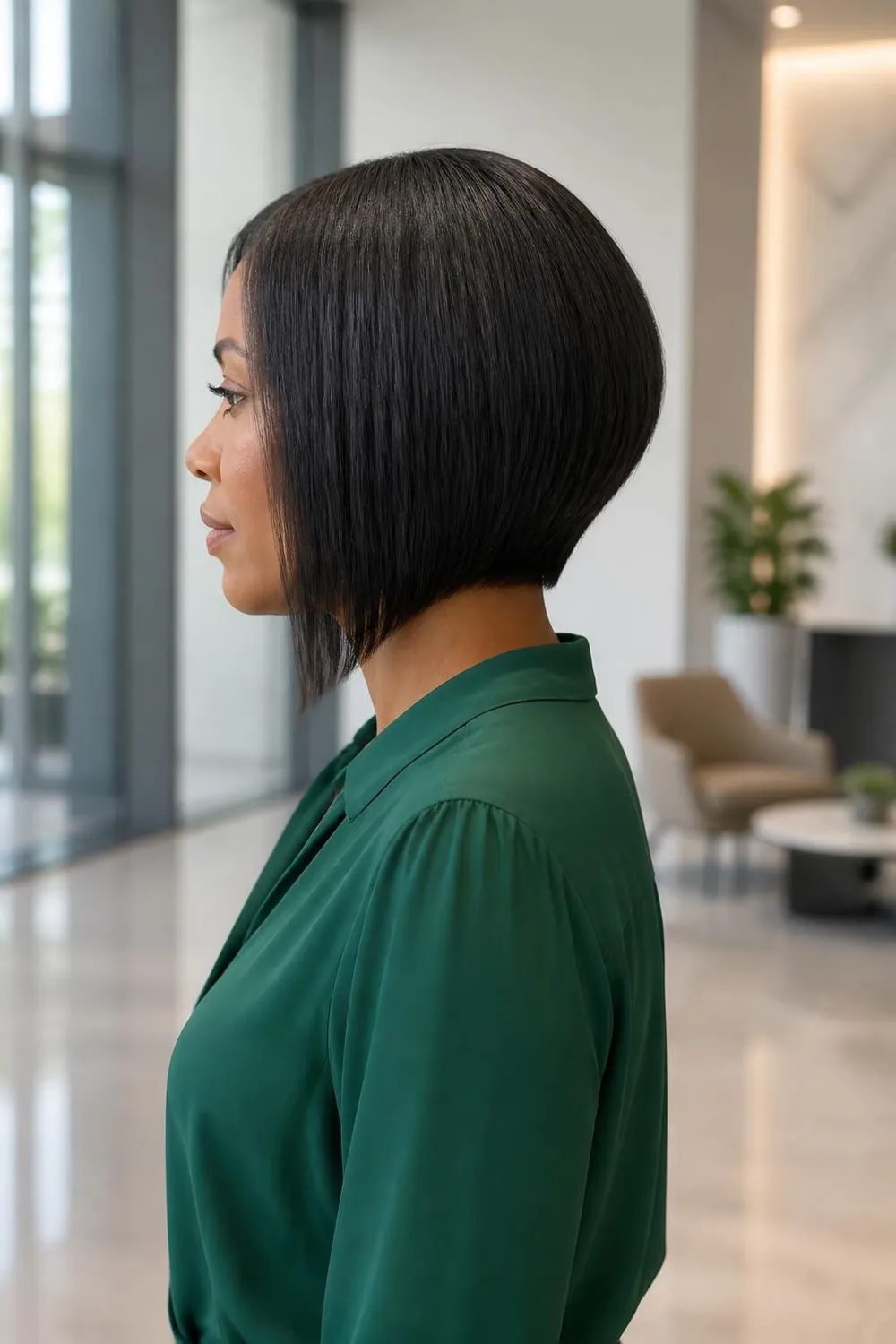
9. Angled Bob, Shorter in the Back
 Save
An angled bob drops from a short nape to longer pieces at the chin. The slope creates movement, and the longer front frames the face without needing thick hair.
Keep the angle gentle, about 1 to 2 inches of difference. A steep angle on thin hair can leave the back looking sparse.
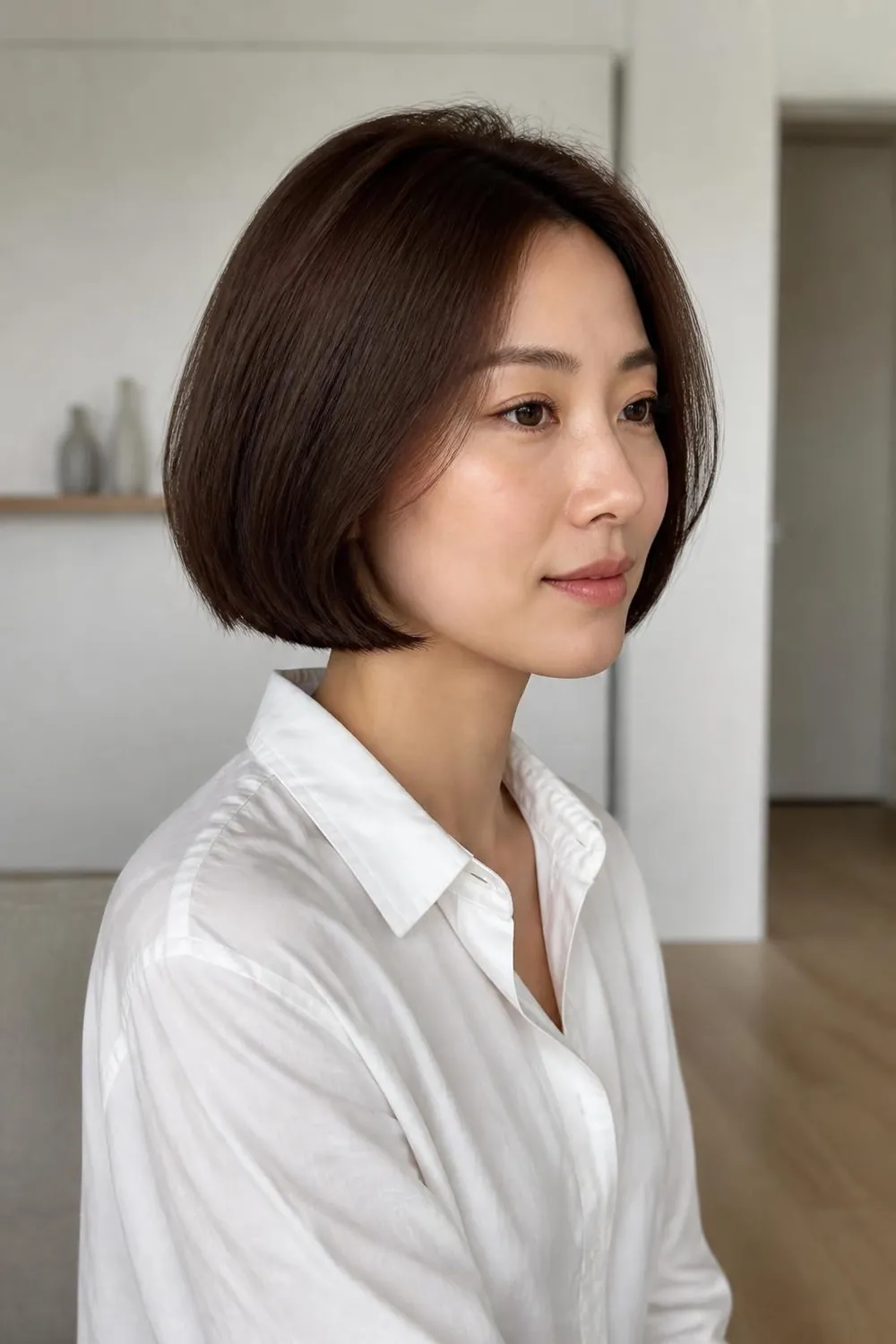
10. Soft Bob With Internal Layers
 Save
From the outside this looks like a plain one-length bob. Underneath, short layers are cut into the lower section so the top layer rests on them and lifts.
The result moves freely and still has a solid edge. It's a smart pick for fine straight hair that goes flat at the crown by midday.
Ask your stylist for: internal or invisible layers, with the perimeter left blunt.
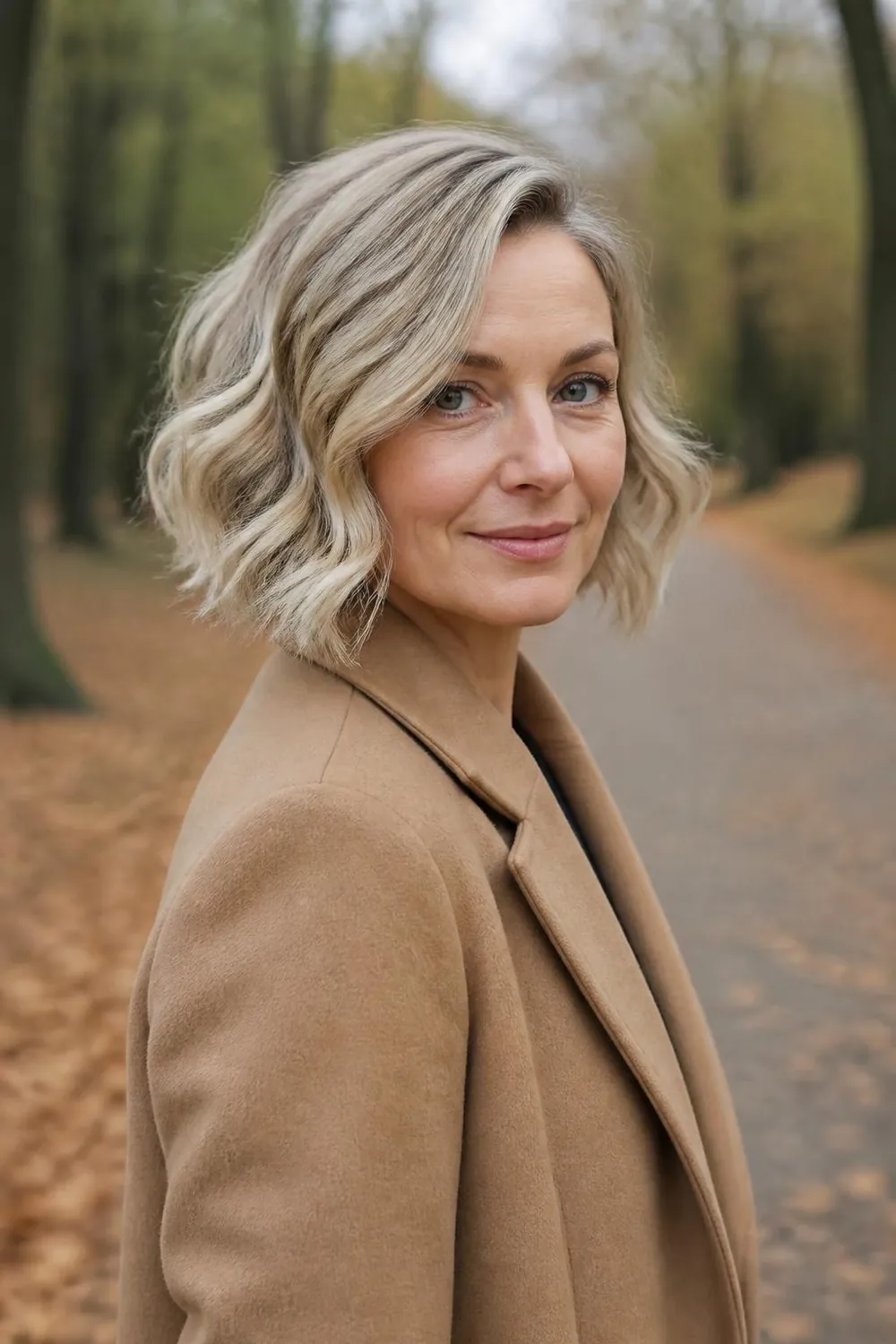
11. Wavy Bob With a Deep Side Part
 Save
Moving your part well to one side lifts the roots on the heavier side right away. Add loose waves and the bob looks far fuller than it does straight.
The deep part also draws attention away from the center part line, which is often the first place thin hair shows.
- Rake mousse through damp roots.
- Dry with the part flipped to the opposite side, then switch it back.
- Wave random sections with a 1-inch iron, leaving the last inch straight.
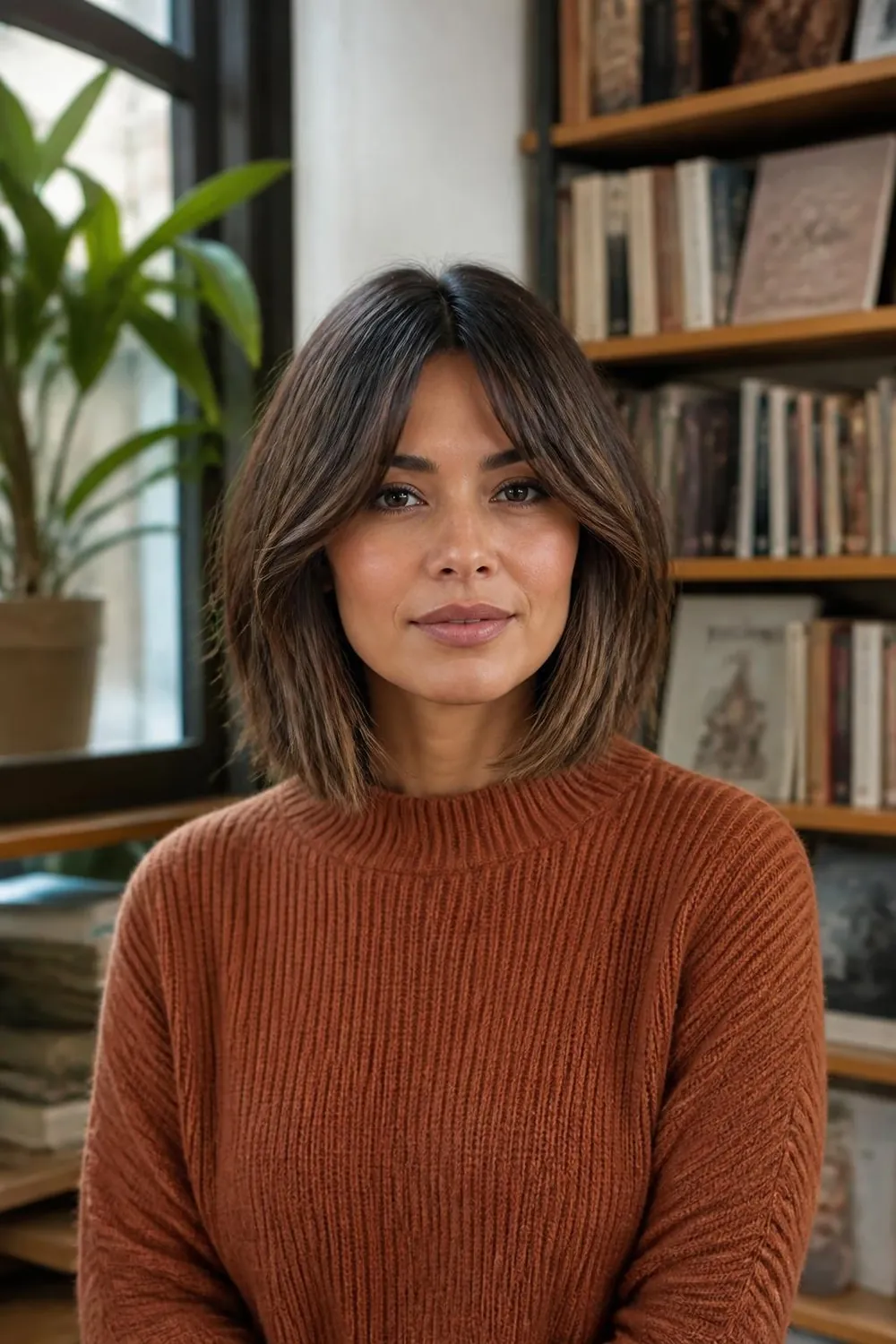
12. Bob With Curtain Bangs
 Save
Curtain bangs part in the middle and sweep out toward the cheekbones. They add a soft front without the commitment of full bangs, and they borrow only a small section of hair.
Pair them with a bob that lands between the chin and the collar. Blow-dry the bangs with a small round brush, rolling each side away from your face.
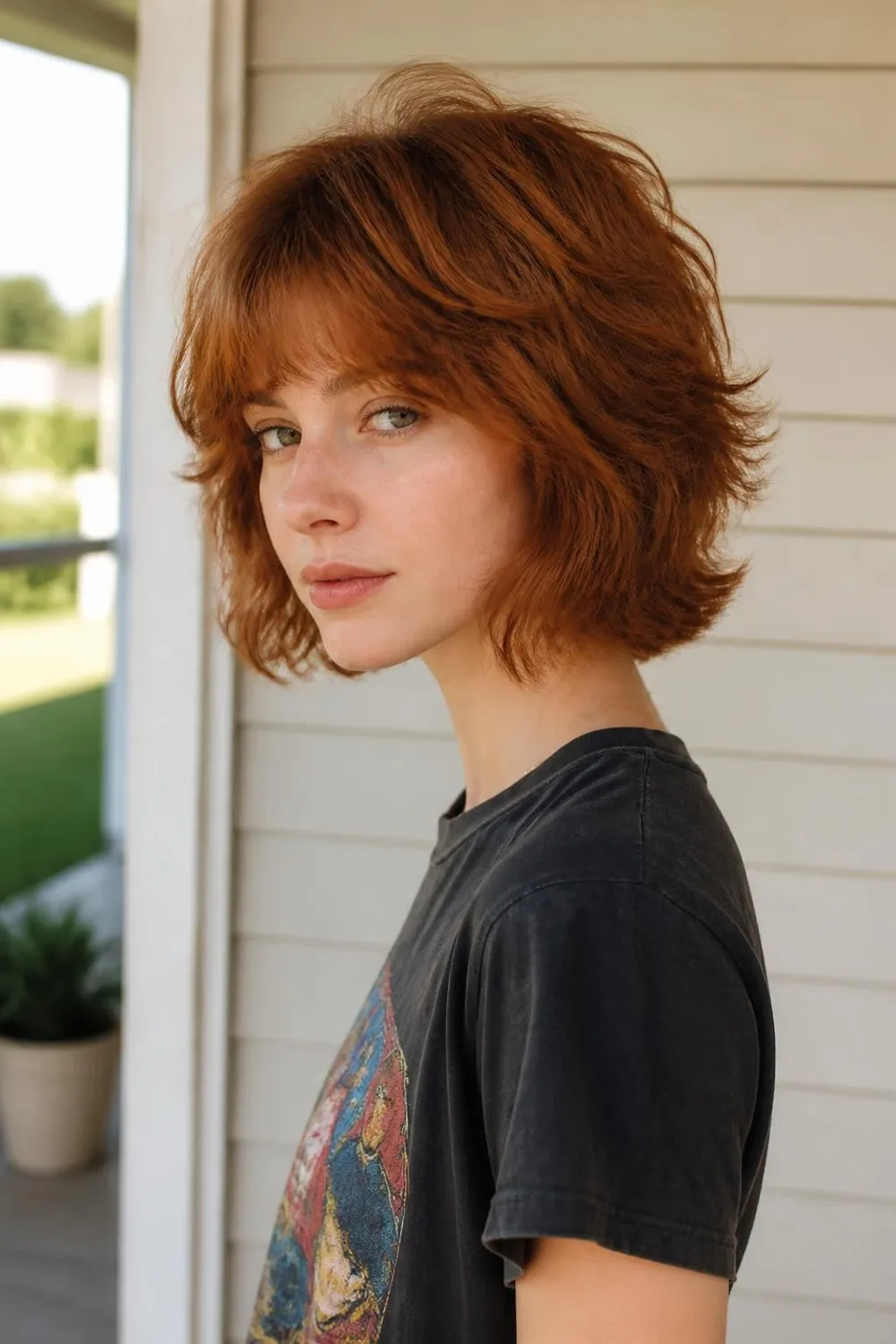
13. Short Shag With Feathery Crown Layers
 Save
A shag sounds risky for thin hair, but a short one works if the layers stay at the crown and the ends stay full. The choppy top creates height, and the denser bottom keeps it from looking wispy.
It loves natural wave. Scrunch in a light curl cream, diffuse on low heat and leave the top a little rough.
Best for: fine wavy hair that won't hold a sleek style.
14. Textured Bob With Babylights
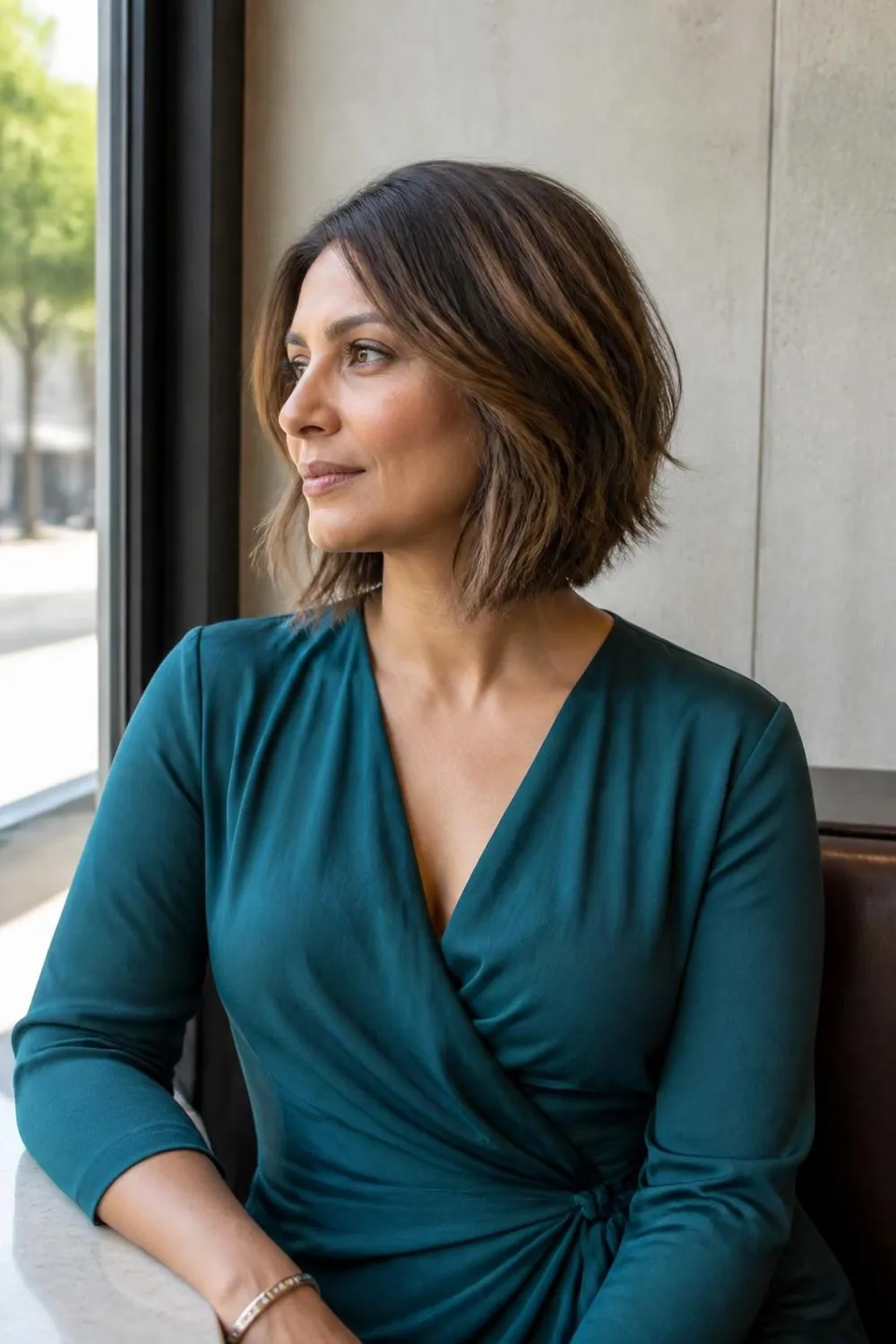 Save
Color can add visual thickness just as a cut can. Babylights are very fine, soft highlights woven close together, and the contrast makes hair look denser.
Try them on a jaw-length bob with light texture at the ends. As a bonus, lightened strands often feel a little coarser, so they hold a wave longer.
15. Blunt Lob at the Collarbone
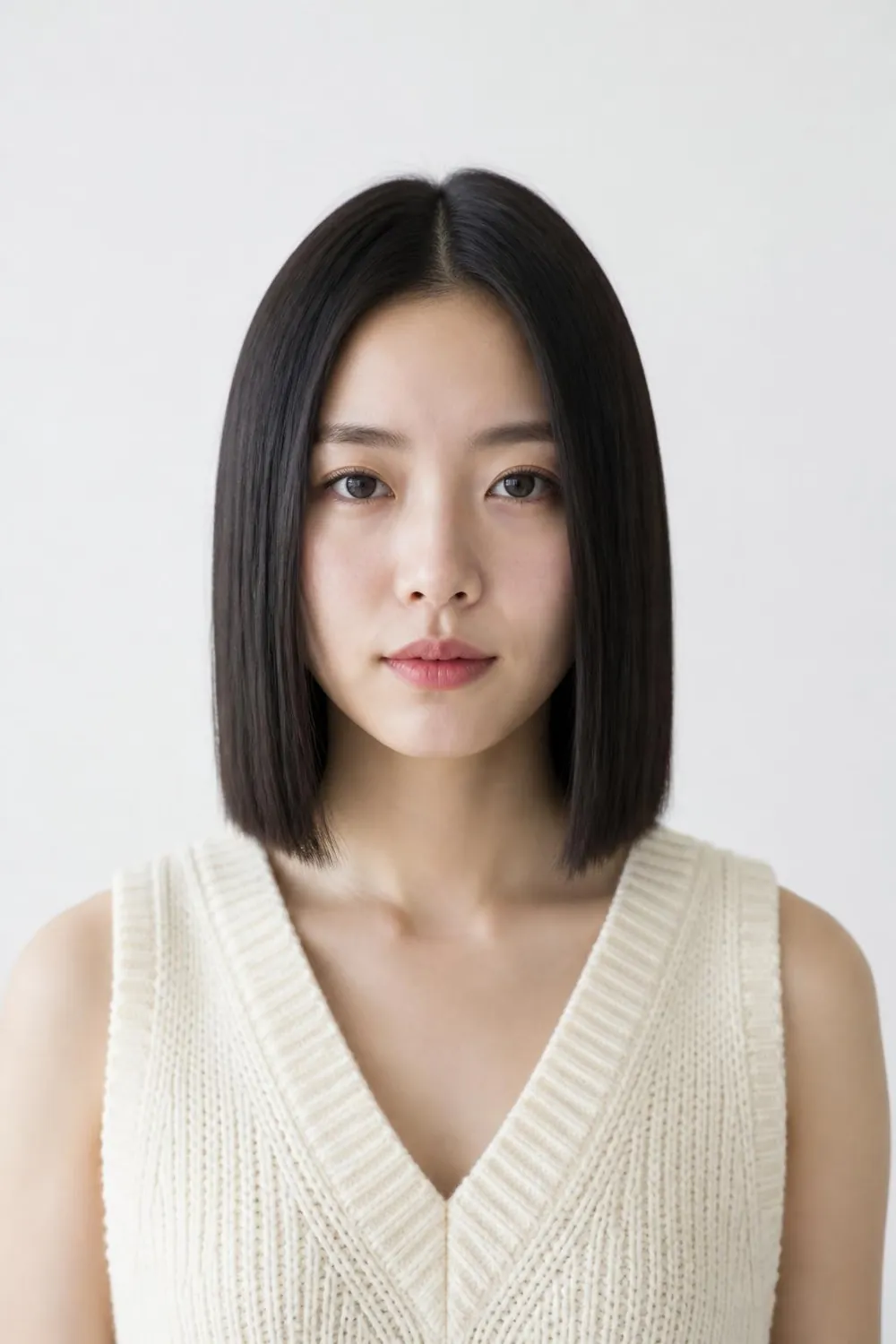 Save
A long bob at the collarbone gives you length to play with while keeping the blunt edge thin hair needs. It's one of the easiest cuts to grow out or trim back.
Wear it sleek with a flat iron, or bend the middle section for soft movement. Either way, keep the bottom inch straight so the edge stays crisp.
16. Lob With Face-Framing Pieces
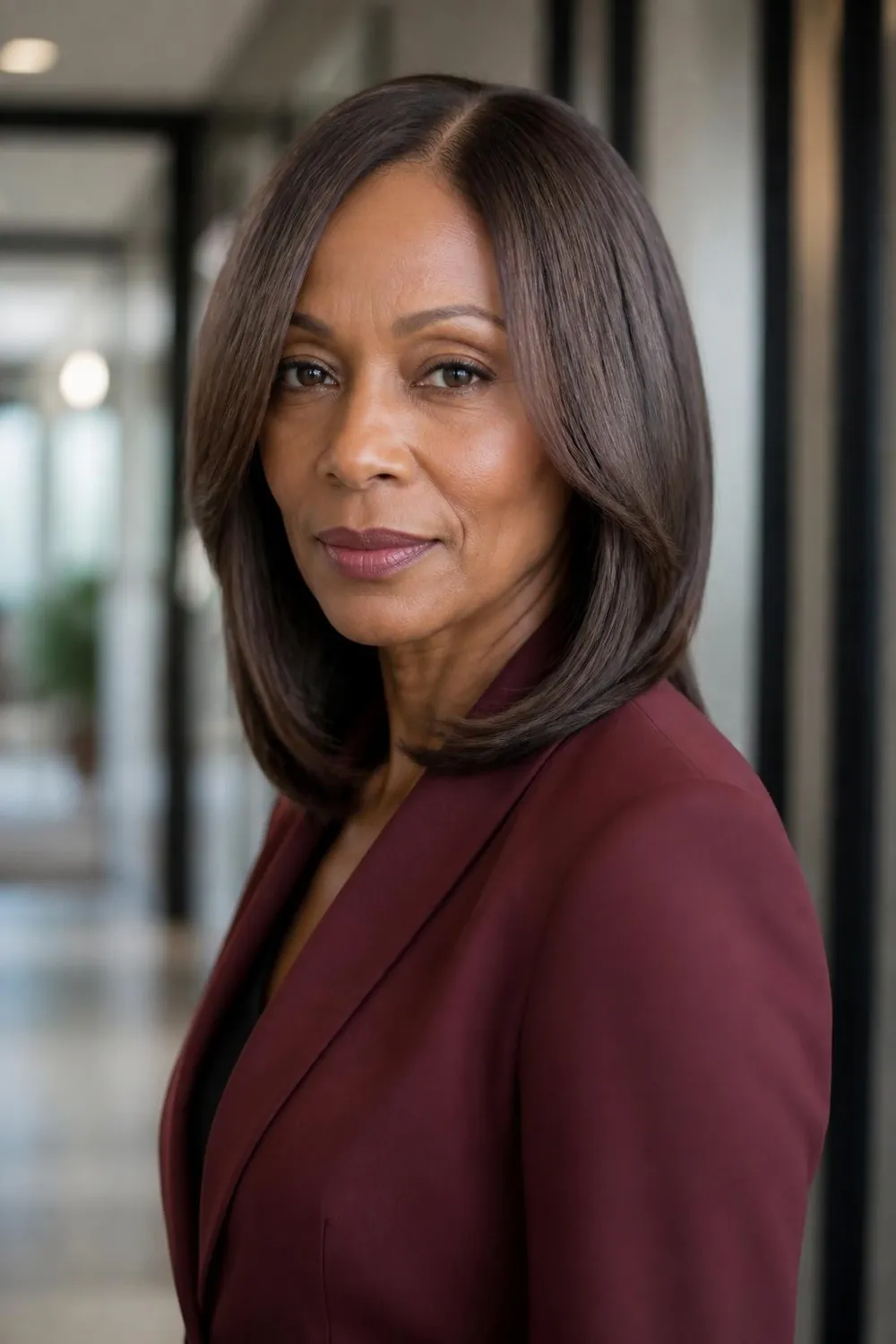 Save
Face-framing pieces are short sections cut around the face only, usually starting at the cheekbone or chin. They give a lob shape and movement without layering the whole head.
That matters for thin hair, because the back keeps its weight. Style the front pieces away from your face with a round brush to open up your features.
17. Textured Lob With Bent Waves
 Save
Bent waves are flatter and looser than curls, made by pressing sections with a flat iron instead of wrapping them. On a lob they create width, which thin hair often lacks.
Leave the ends straight and finish with a dry texture spray. Waves like this tend to look even better on day two.
Styling time: 15 minutes.
18. Shoulder Cut With Long Soft Layers
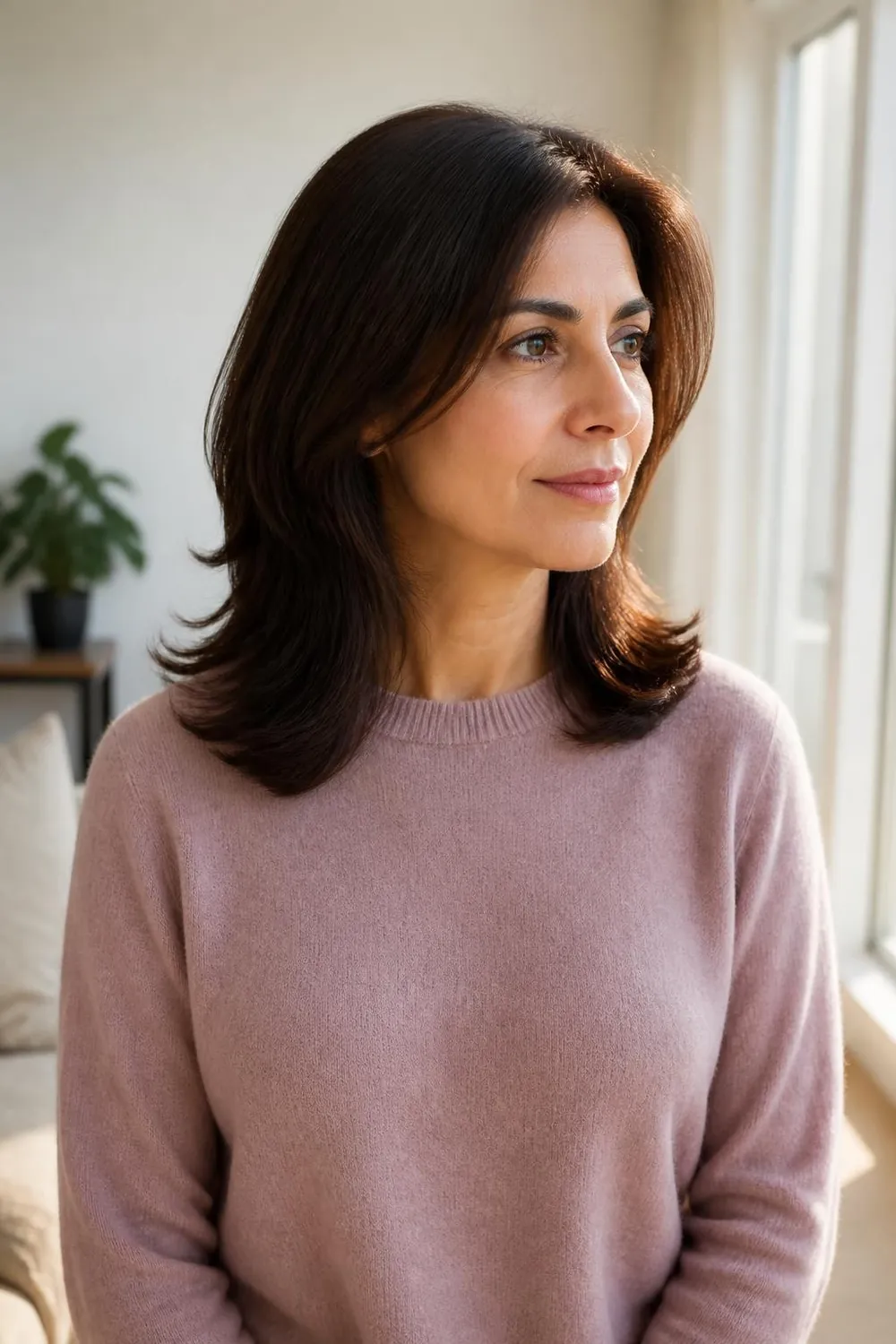 Save
Long layers keep most of your length and start well below the chin, so the shape gets movement without losing fullness. They suit thin hair with a little body or wave.
Keep the shortest layer at or below the jaw. Anything shorter can leave the bottom looking see-through.
19. Collarbone Shag
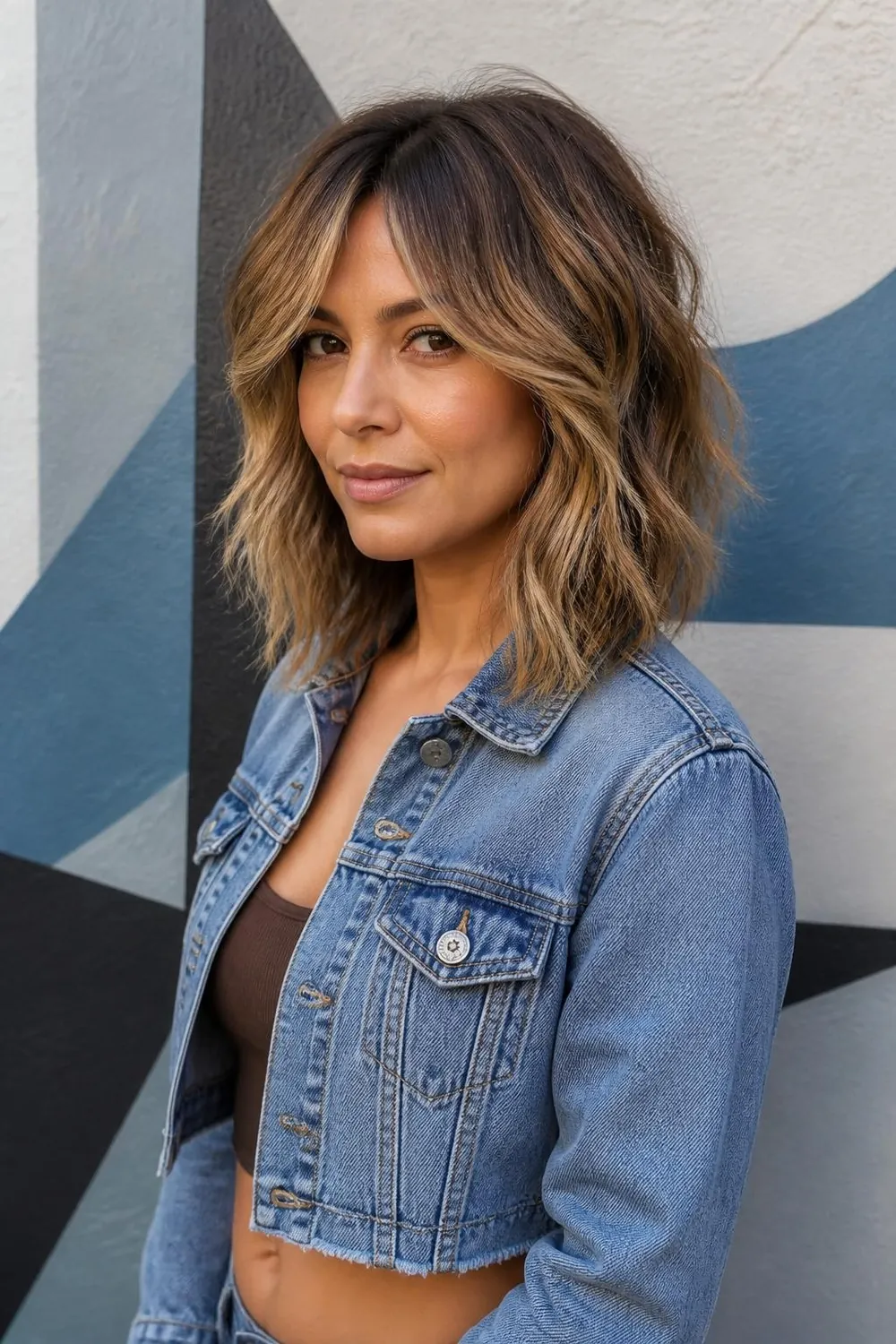 Save
This medium shag has short, choppy layers around the crown and face that taper into a fuller bottom. Height lands right where thin hair tends to go flat.
Natural wave helps it most. Diffuse it with a light mousse, then twist a few pieces around your finger to define them.
20. Shoulder-Length Cut With Flipped Ends
 Save
A flip at the ends adds shape and makes the hemline look thicker. It nods to the 1960s, with a looser, softer bend than the stiff original.
Blow-dry the ends outward over a large round brush, or flip them with a flat iron. A light hairspray holds the bend through the day.
21. Medium Cut With Wispy Bangs
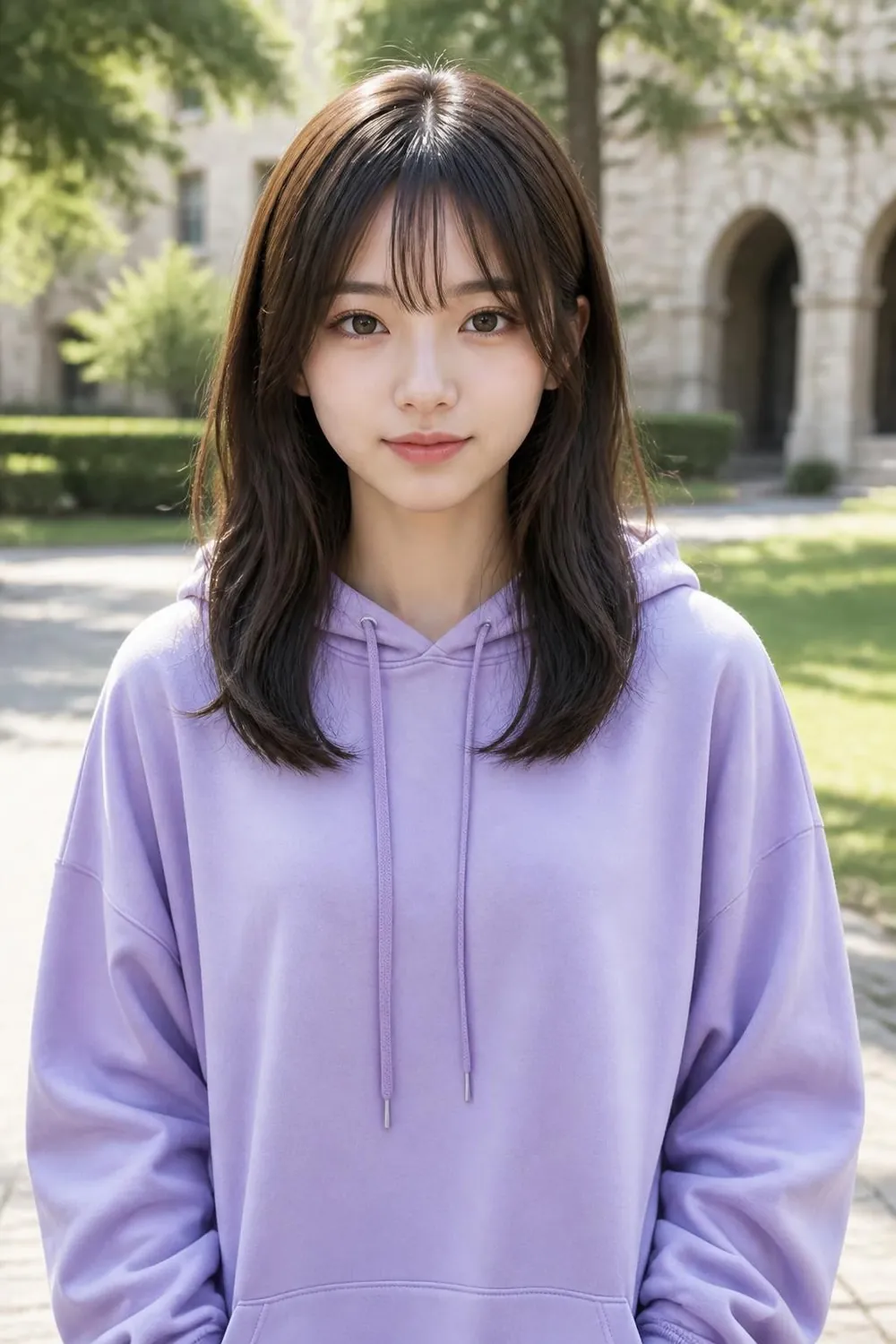 Save
Wispy bangs are light and see-through, cut from a narrow section so they don't steal hair from the sides. They soften the face and draw the eye to it.
Have them cut a touch longer than your brows. They dry in two minutes with a small brush or just your fingers.
22. Mid-Length Cut With Side-Swept Bangs
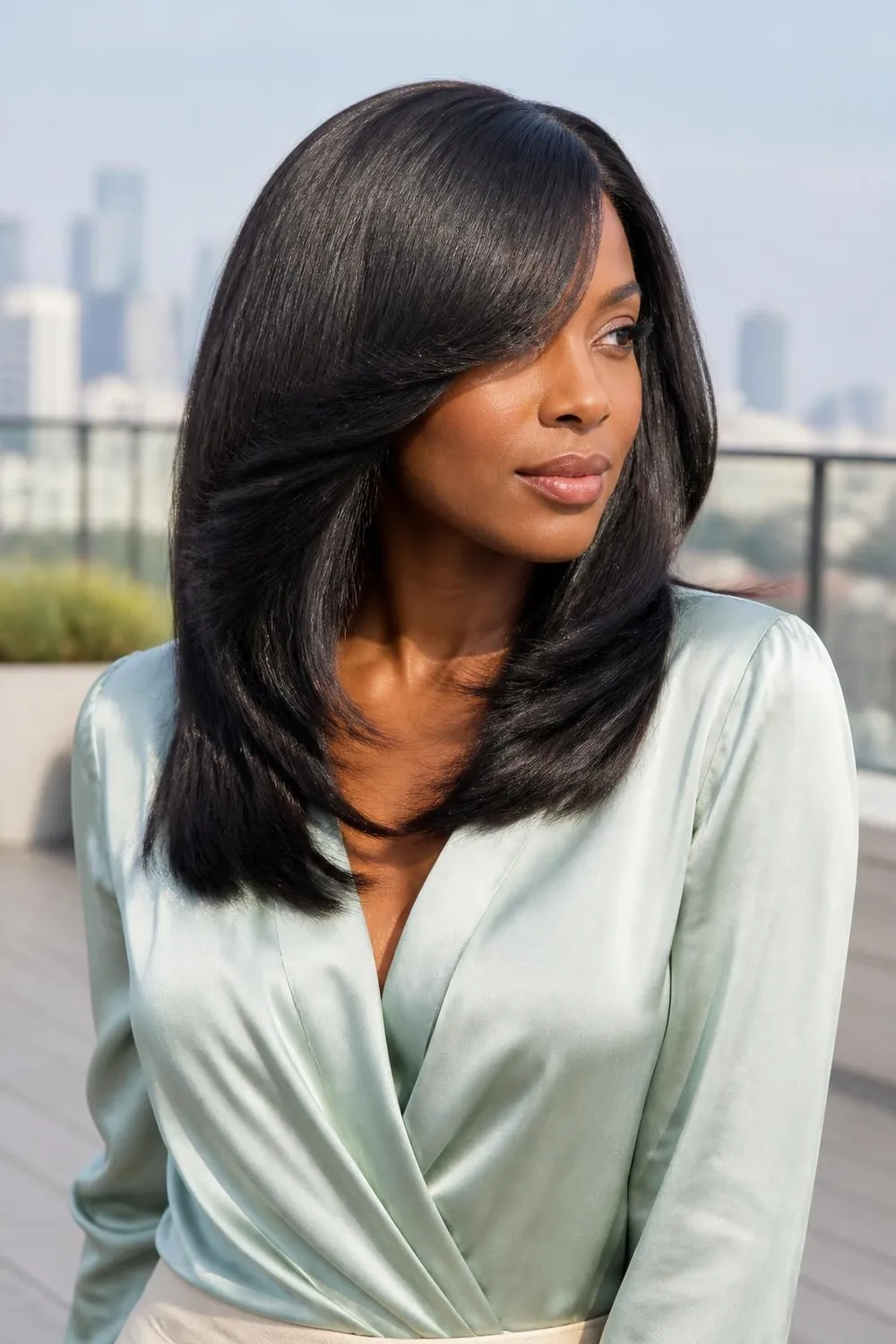 Save
Side-swept bangs cut on an angle blend into the rest of the hair. They add a diagonal line across the face and lift the front when you sweep them over.
This is a forgiving choice for a thin hairline, because the sweep covers more ground than straight bangs. Dry them with the nozzle pointed down to keep them smooth.
23. Light Butterfly Layers
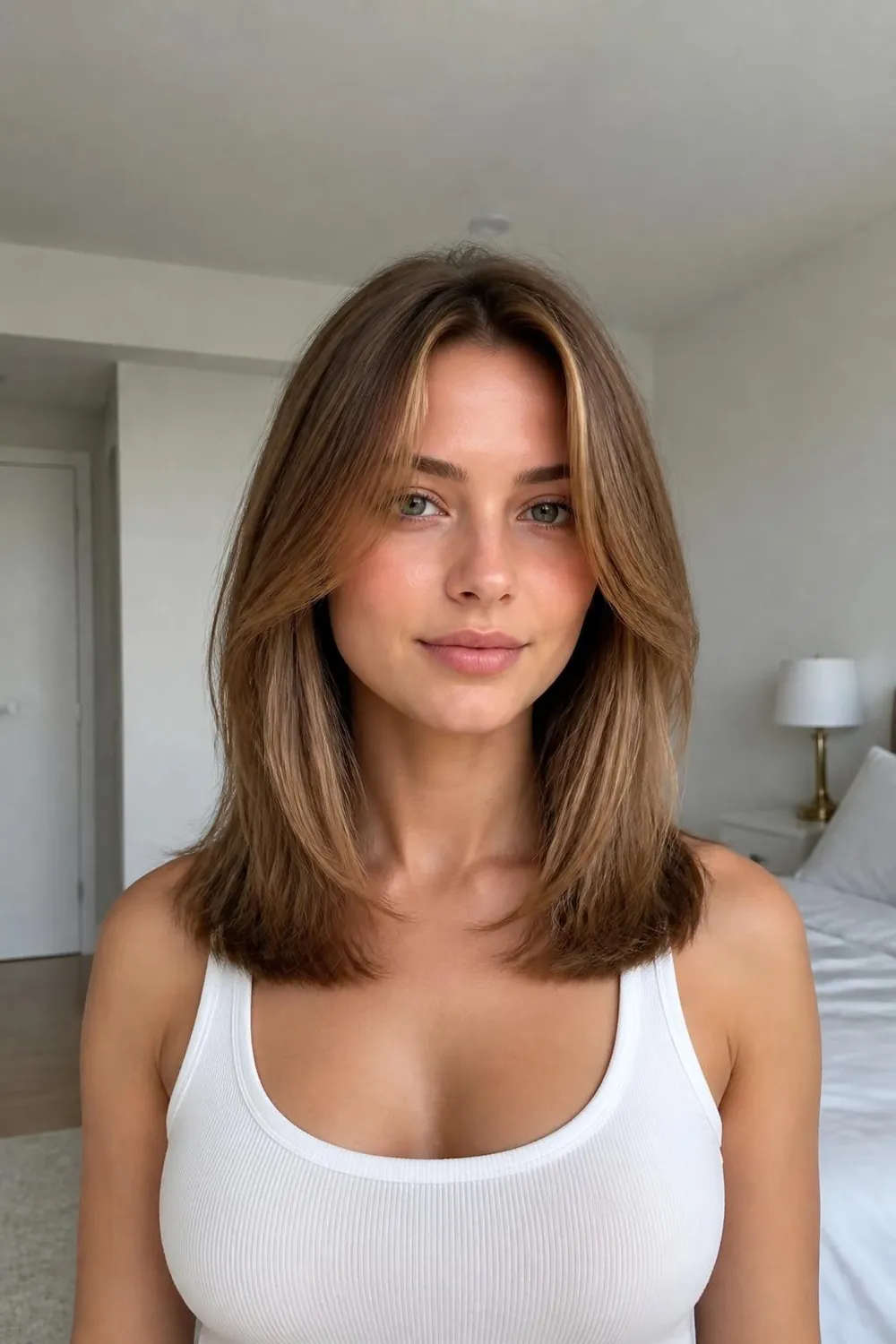 Save
The butterfly cut stacks short layers around the face and crown over longer lengths, and the full version can strip thin hair. A lighter take keeps the short layers to the front and top only.
The bottom should stay blunt. Blow it out with a large round brush, rolling the front layers away from your face for that winged shape.
Stylist tip: show your stylist a photo of the front only. The back of most butterfly photos has far more layering than thin hair can carry.
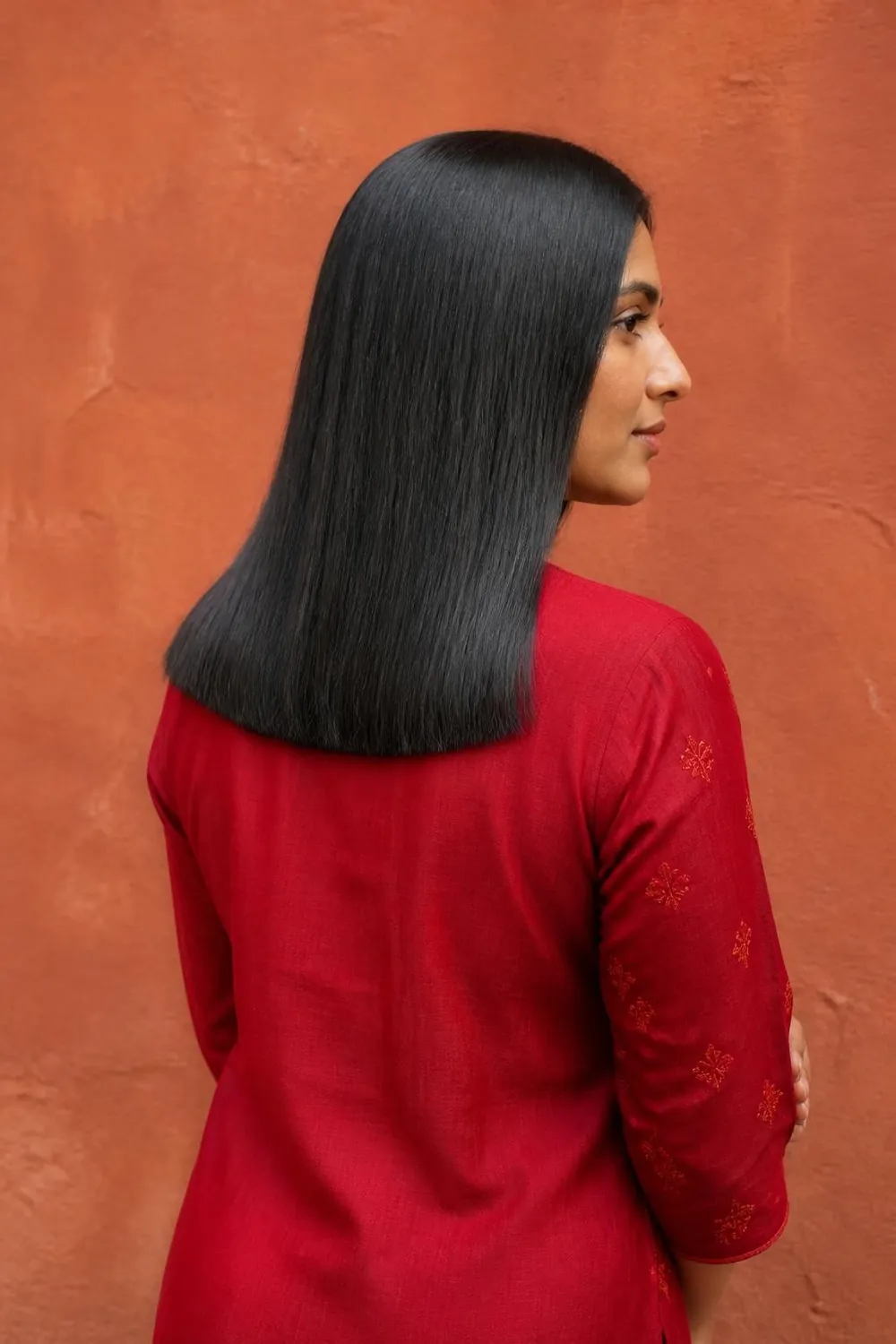
24. Long Hair With a Blunt Hemline
 Save
Long hair can work with thin hair, as long as the ends stay full. A blunt hemline a few inches past the shoulders keeps the bottom dense and stops the see-through look.
Trim every 8 to 10 weeks to keep the line sharp. Split ends show quickly on fine strands, and they make the hem look ragged.
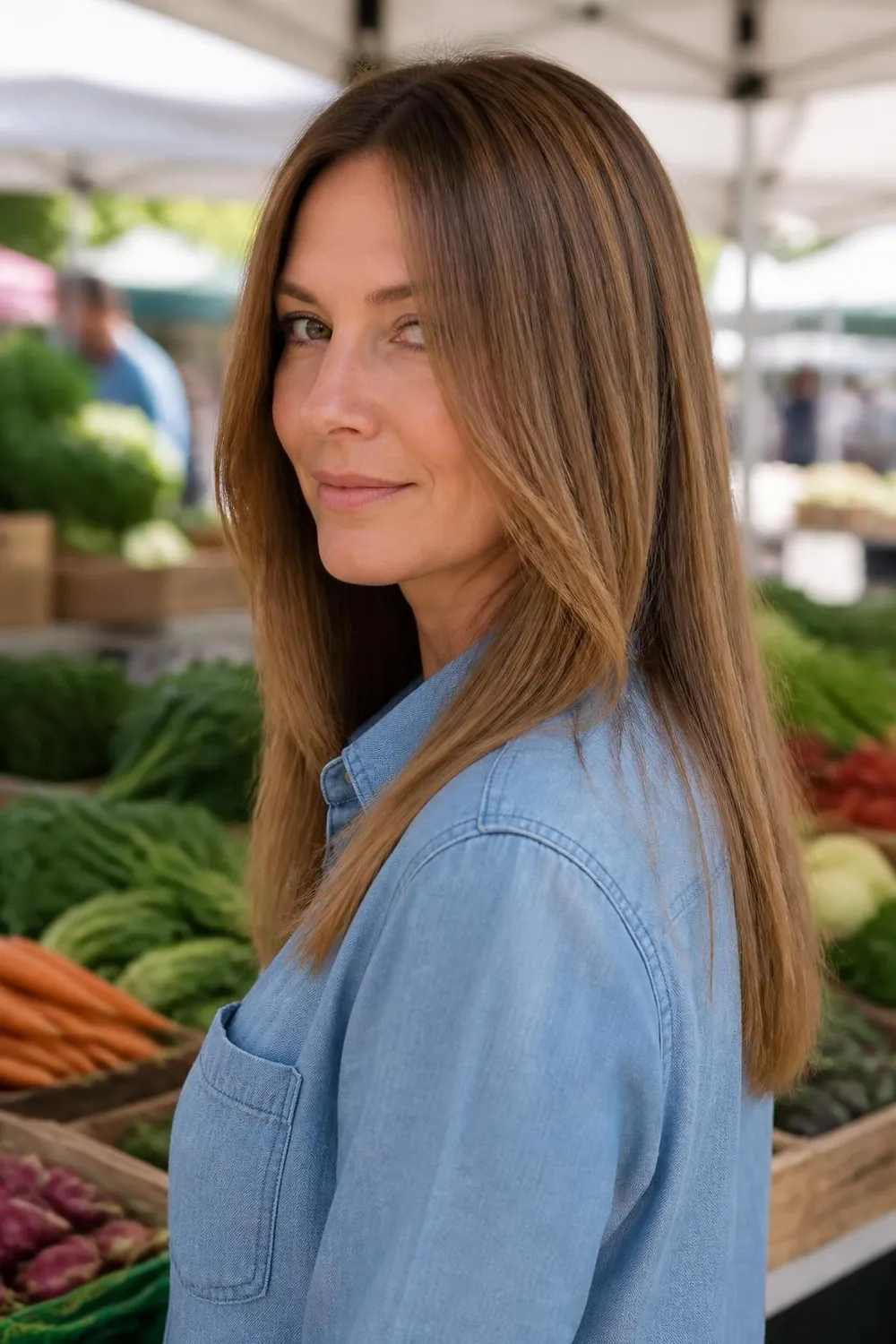
25. Long Cut With Face-Framing Layers Only
 Save
Here the layers go around the face and nowhere else. The back stays one length, so the ends keep their weight, while the front gets shape.
Start the frame at the chin or lower. Curl those front sections back with a large barrel for movement in about five minutes.
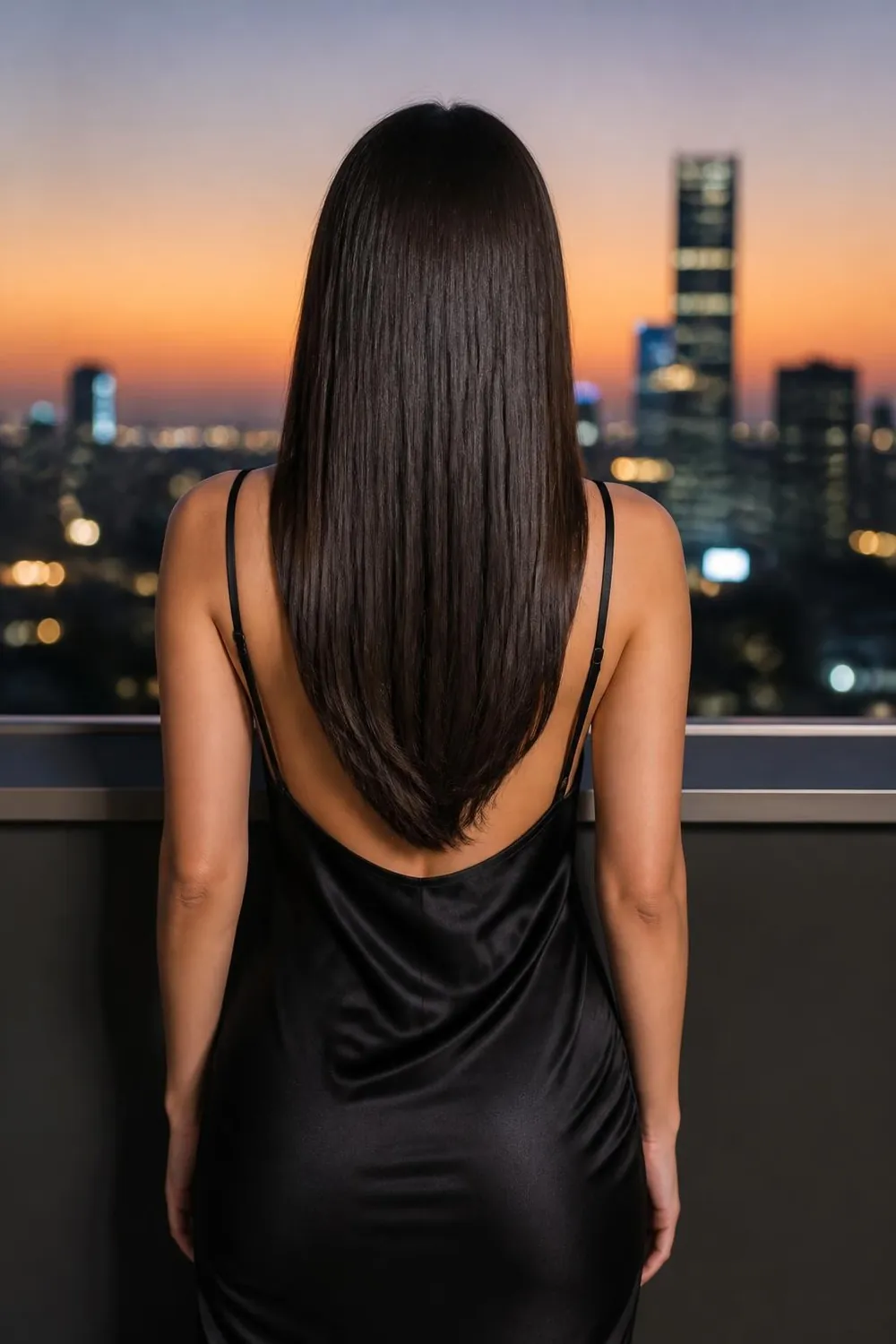
26. Long U-Shaped Hemline
 Save
A soft U shape curves gently at the back. It gives long hair a finished look and keeps more weight than a sharp V, which can leave thin ends wispy.
Keep the curve subtle, with only an inch or two of difference between the center and the sides. Wear it straight or with loose waves.
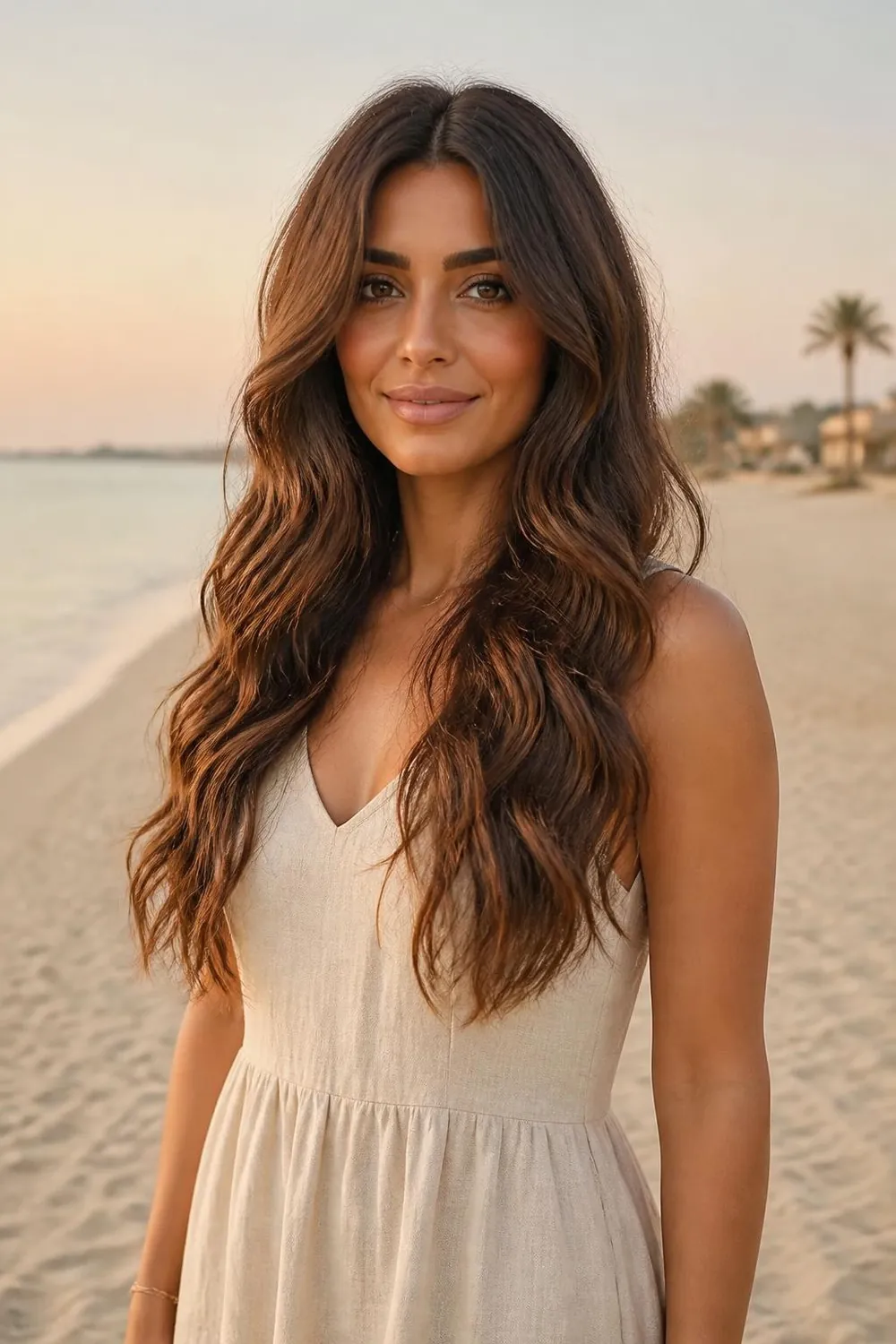
27. Long Beach Waves With a Middle Part
 Save
Waves create space between strands, so long thin hair looks thicker the moment it's curled. A middle part keeps the look current and balances the waves on both sides.
Curl vertical sections with a 1.25-inch wand, alternating direction. Run your fingers through once the waves cool and mist with a light texture spray.
28. Long Layers for Wavy Thin Hair
 Save
Natural waves can drop heavy and straight at the bottom of long hair. A few long layers, starting around the shoulder, release the wave pattern without hollowing out the ends.
Scrunch in mousse and air dry, or diffuse on low. Avoid rich curl creams, which can pull fine waves straight.
Best for: 2A to 2C waves.
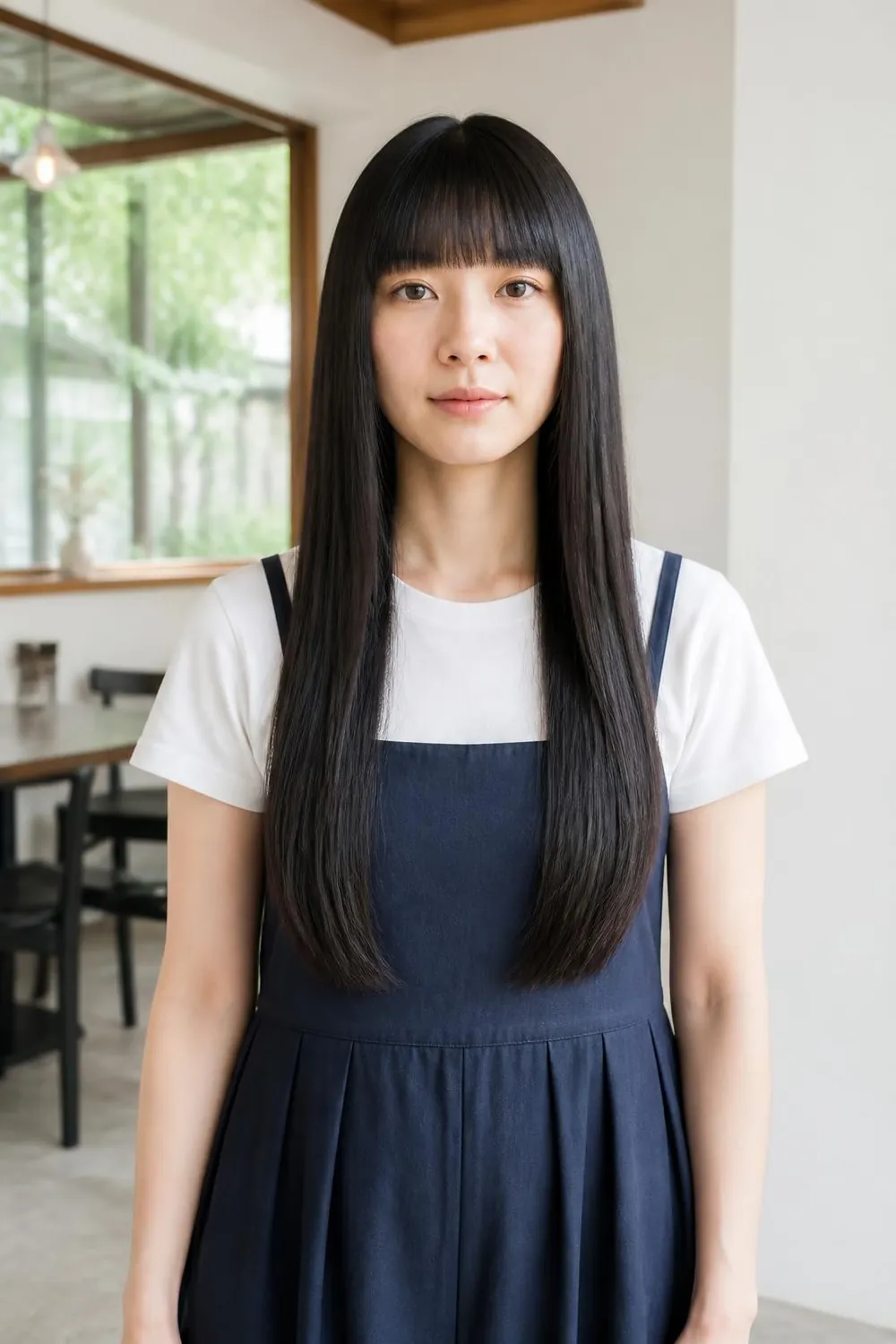
29. Long Hair With Full Blunt Bangs
 Save
Full bangs give long thin hair a strong focal point. They concentrate density right at the front, which makes the lengths look thicker by contrast.
The bangs need a triangle section deep enough to look full, so talk through the depth with your stylist. Trim them every 3 to 4 weeks between cuts.
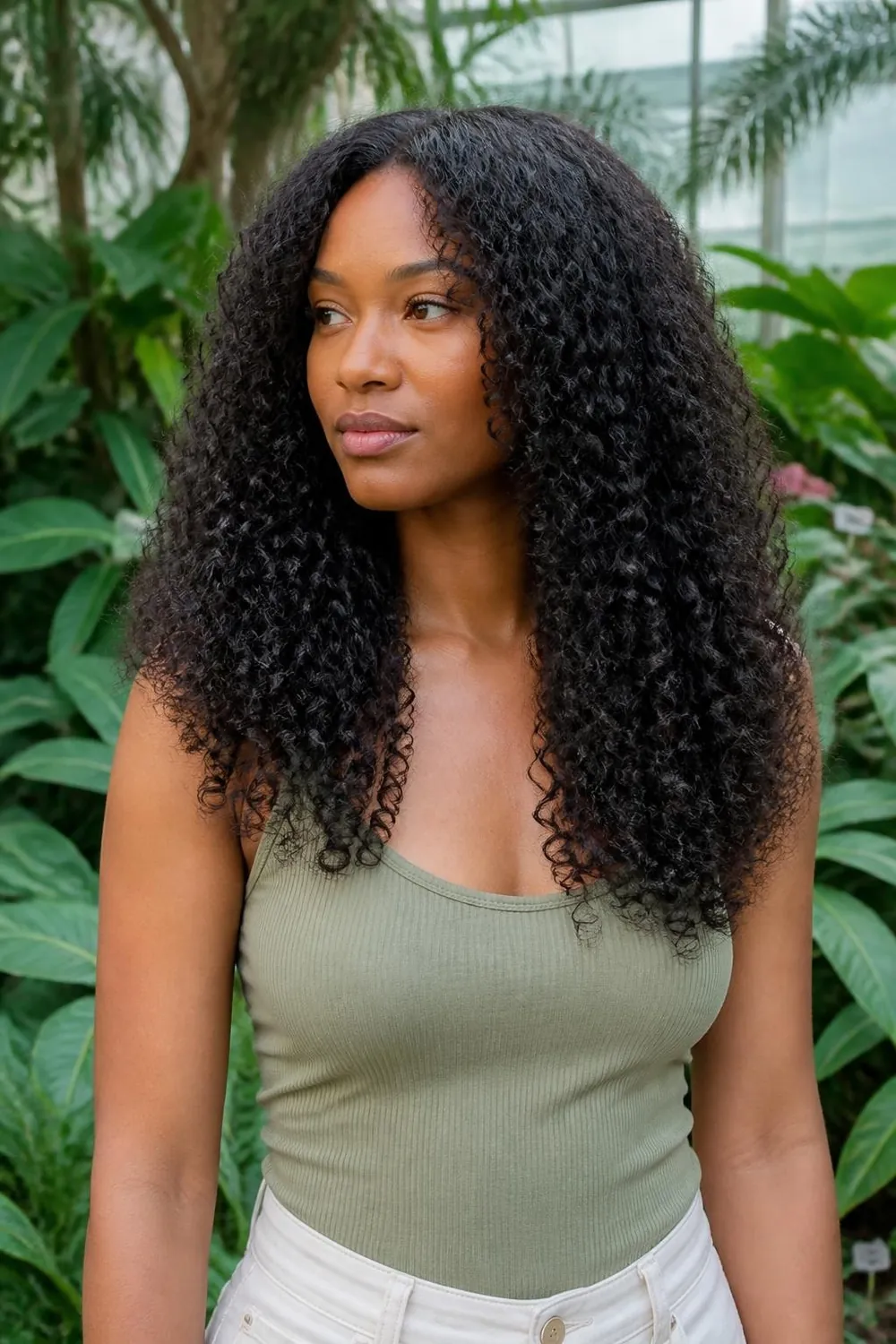
30. Long Curly Cut With Rounded Layers
 Save
Fine curls can look stretched and sparse at the bottom when they are all one length. Rounded layers, cut curl by curl, let the shape stack up and widen.
Look for a stylist trained in dry curl cutting. Use a lightweight gel instead of a rich butter, and diffuse with your head upside down.
How to Blow-Dry Thin Hair for Volume
Most of the cuts above look fuller with five minutes of root work. Here's a simple routine:
- Start with damp, not wet, hair. Squeeze with a towel, don't rub, and wait until hair is about 70 percent dry.
- Apply product at the roots only. Comb a golf-ball-sized puff of mousse, or a few sprays of root lifter, through the first 2 inches.
- Dry your roots in the wrong direction. Push the hair against its natural fall, then flip it back once dry. This alone adds visible lift.
- Use a round brush on the crown. Lift sections straight up, aim the nozzle down the brush and hit each one with the cool shot before releasing.
- Finish light. A dry texture spray beats heavy hairspray, and dry shampoo on day two gives the roots grip again.
Want to narrow it down by length? See these short haircuts for fine thin hair and medium haircuts for fine thin hair. For a round face, our haircuts for thin hair and round faces focus on height and length. Over 50, try these haircuts for women over 50 with fine hair with low-maintenance options and color ideas.
Frequently asked questions
What is the best haircut for thin hair for women?
For most women with thin hair, a blunt bob that lands near the collarbone looks fullest. It keeps every strand at the same length, so the edge looks dense. If you love short hair, a pixie with length on top is the next strong choice.
What hairstyle makes thin hair look thicker?
Styles with height at the roots and bend through the lengths make thin hair look thicker. Try a deep side part, bent waves or a round-brush blowout. Flat, slicked styles tend to show more scalp.
What is the best hairstyle for thinning hair for women?
A short to mid-length cut with soft layers on top and a side part disguises a wider part well, and light texture at the crown helps too. If you notice new shedding or a widening part, see a dermatologist to find the cause before you change your routine.
Should thin hair have layers?
Yes, but the right kind. Internal layers and face-framing pieces add movement without taking weight from the ends. Heavy surface layers all over the head usually make thin hair look sparser.
How often should thin hair be trimmed?
Plan on every 6 to 8 weeks for pixies and bobs, and every 8 to 12 weeks for longer hair. Fine ends split easily, and a fresh edge always looks thicker.