20 Haircuts for Women Over 60 With Soft, Flattering Bangs
Maybe your part looks flatter than it used to, or the hair at your temples has gone a little sparse. A fringe handles both in one appointment. Bangs pull attention to your eyes, soften the face and make even a simple cut look finished.
This list runs from pixies to bobs, then medium cuts and long hair. Each look names the bang type to ask for, who it suits and how much styling it needs. Most take five minutes or less in the morning.
Jump to a look (22)
- How to Choose Bangs After 60
- 1. Soft Pixie With Wispy Bangs
- 2. Choppy Crop With Piecey Bangs
- 3. Side-Swept Pixie With a Long Fringe
- 4. Bixie With Brow-Grazing Bangs
- 5. Curly Pixie With a Coiled Fringe
- 6. Short Tapered Cut With Baby Bangs
- 7. Classic Chin-Length Bob With Blunt Bangs
- 8. Smooth Bob With Curved Bangs
- 9. Stacked Bob With a Side Fringe
- 10. Wavy Bob With Tousled Bangs
- 11. French Bob With Eyebrow Bangs
- 12. Shoulder-Length Shag With a Blended Fringe
- 13. Collarbone Cut With Bottleneck Bangs
- 14. A-Line Lob With Long Curtain Bangs
- 15. Mid-Length Curls With Spiral Bangs
- 16. Retro Flip With Side-Parted Bangs
- 17. Long Layers With Bardot Bangs
- 18. Long Straight Hair With a Full Fringe
- 19. Long Waves With Cheekbone-Length Bangs
- 20. Long Cut With a Grown-Out Fringe
- How to Keep Bangs Fresh Between Trims
How to Choose Bangs After 60
- Match the fringe to your texture. Fine hair looks fuller with wispy bangs cut from a small triangle at the front. Thick hair needs longer curtain or side bangs, so the fringe never sits like a heavy shelf. Curls should be cut dry, one curl at a time.
- Start longer than you think. Ask for bangs that land just below the brow. Hair springs up about a quarter inch as it dries, and you can always go shorter at the next visit.
- Work with your cowlick. A strong swirl at the hairline fights blunt bangs every morning. An angled fringe, or one split down the middle, lets it fall the way it wants to go.
- Mind your glasses. Bangs should end just above the frame or skim its top edge. Anything longer slips behind the lenses and gets oily fast.
- Plan for quick fringe trims. Bangs lose their shape in 3 to 4 weeks, well before the rest of the cut. Many salons offer free or low-cost bang trims between your regular appointments every 5 to 8 weeks.
- Keep two tools by the sink. A 1-inch round brush and a narrow blow-dryer nozzle shape almost any fringe in 3 minutes. Add a puff of dry shampoo at the roots, and the bangs won't separate by afternoon.
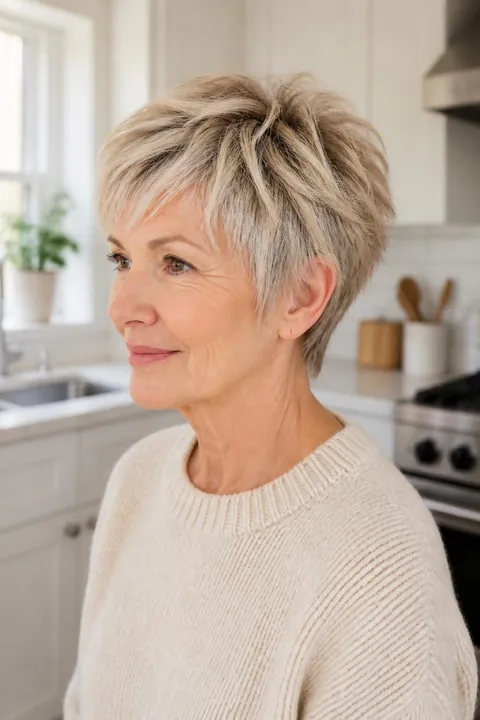
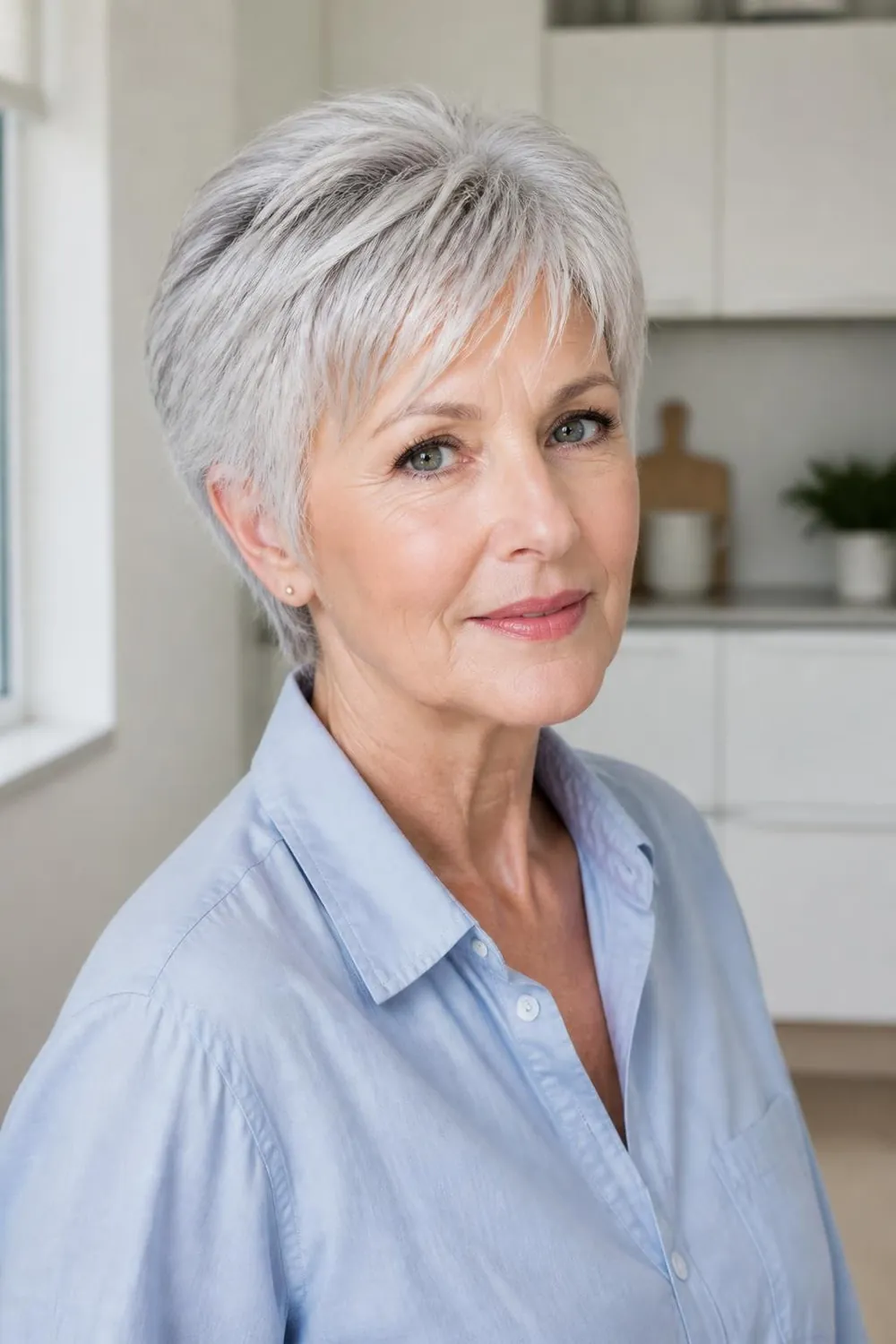
1. Soft Pixie With Wispy Bangs
 Save
Wispy bangs are the gentlest way to start. Your stylist point cuts the fringe so light shows through it, which keeps fine hair from looking heavy at the front.
The rest of the pixie stays an inch or two long with soft layers on top. Rough-dry it with your fingers, then smooth the bangs sideways with a flat brush.
Best for: fine or thinning hair and anyone trying bangs for the first time.
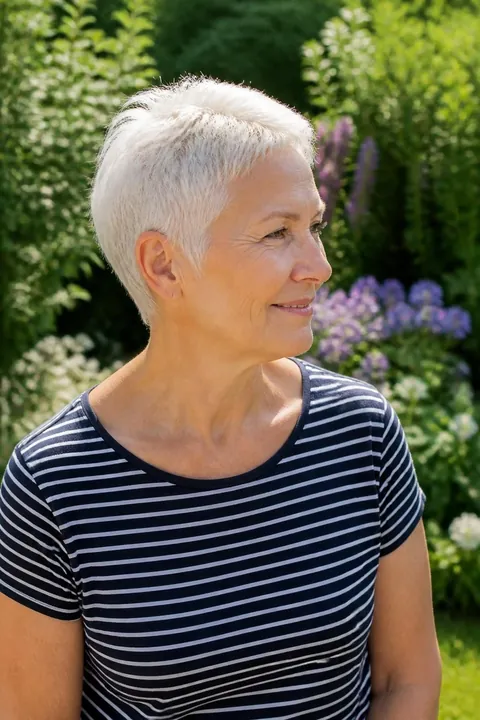
2. Choppy Crop With Piecey Bangs
 Save
This crop has attitude. The stylist cuts the top into uneven pieces with a razor, and the bangs land in separate strands at mid-forehead.
A pea-sized dab of matte paste rubbed between your fingers gives the pieces definition. Skip shine products here, since a dry finish reads more modern and makes hair seem thicker.
Styling time: 3 minutes.
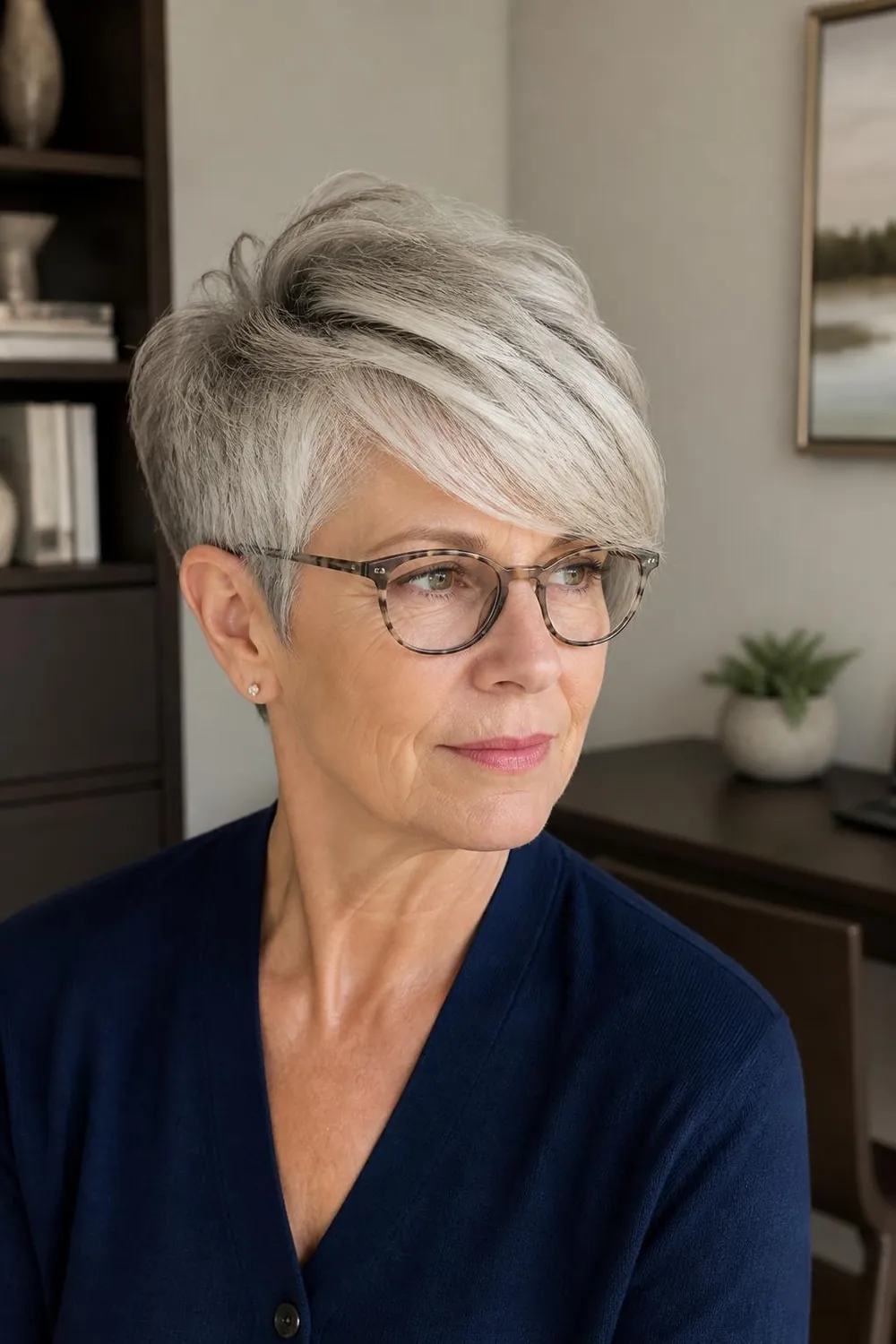
3. Side-Swept Pixie With a Long Fringe
 Save
Here the front is left 4 to 5 inches long and swept across the forehead in one smooth line. Sides and back stay tight, so the cut grows out neatly for six weeks or more.
That long fringe sits above eyeglass frames instead of behind them. It is a smart pick if you wear readers all day. For more frame-friendly shapes, see our guide to haircuts for women over 60 with glasses.
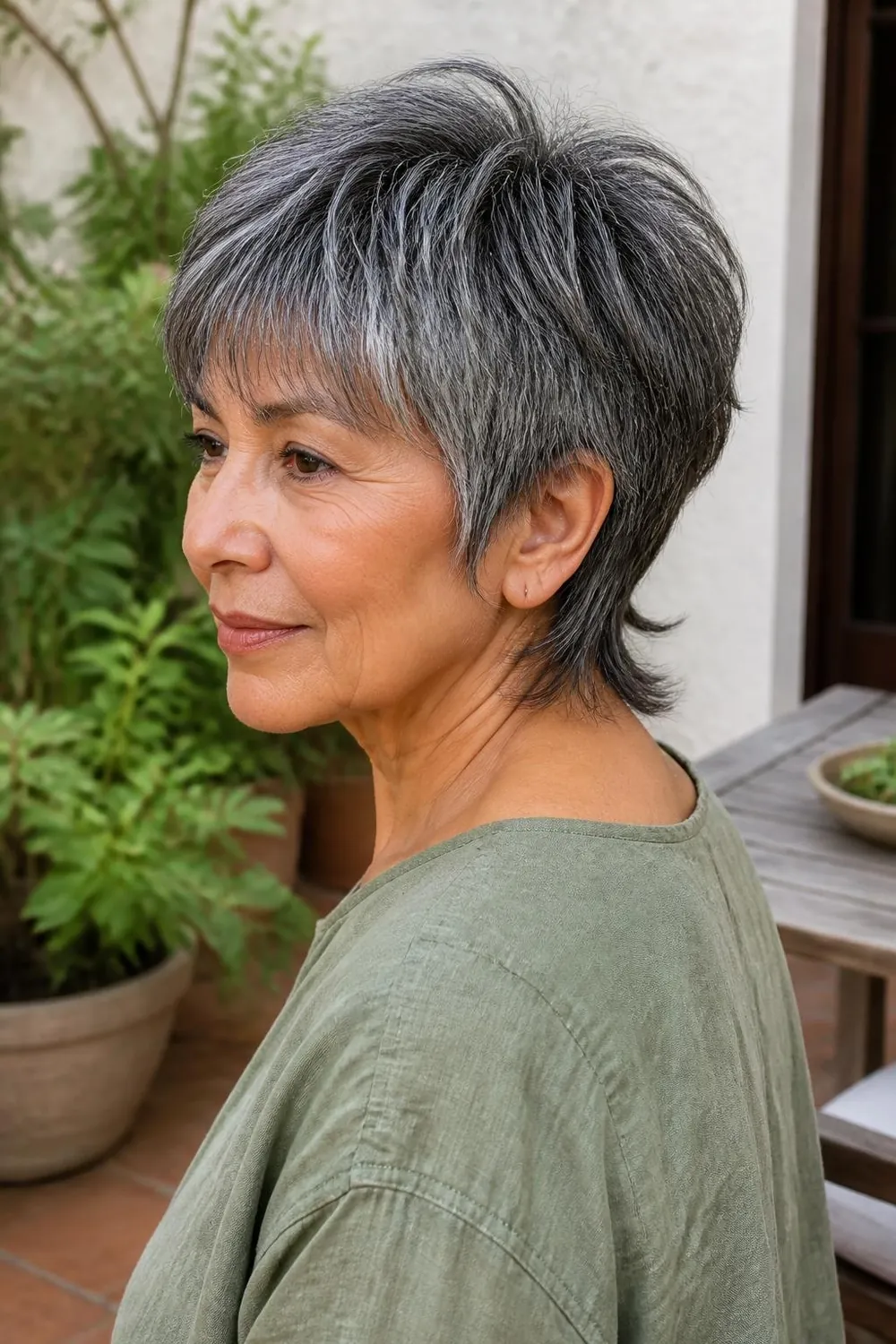
4. Bixie With Brow-Grazing Bangs
 Save
Half pixie, half bob, the bixie leaves more length at the sides and nape than a pixie but less weight than a bob. Bangs that just touch the eyebrows tie the shape together.
It suits hair that feels too thick for a pixie and too limp for a bob. Ask for soft, shaggy layers through the crown so the top never falls flat.
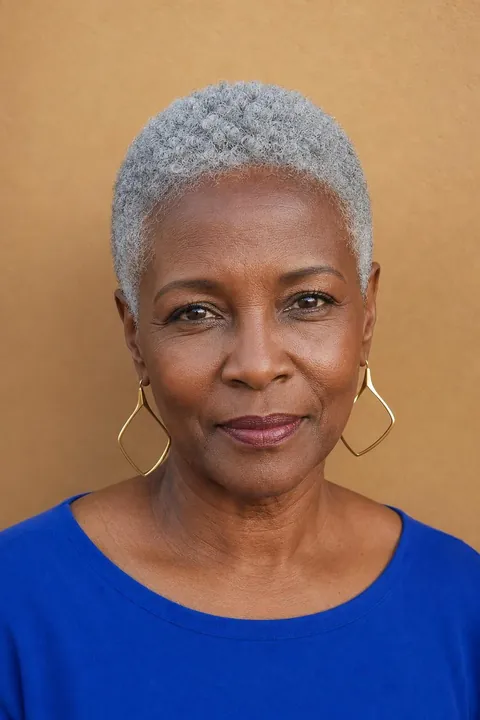
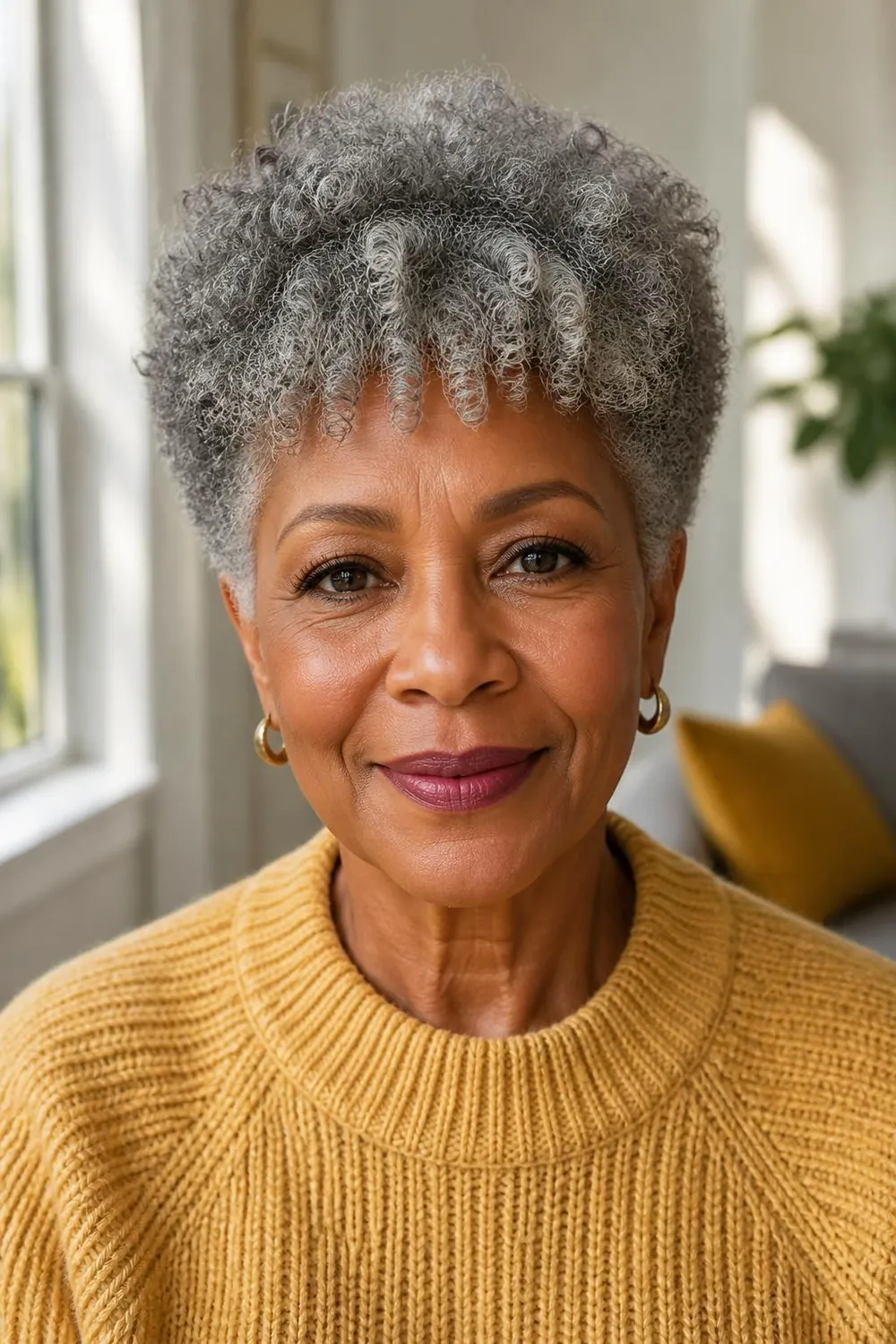
5. Curly Pixie With a Coiled Fringe
 Save
Curly bangs are easier than most people think. The key is a stylist who cuts them dry, curl by curl, so each coil sits where it naturally falls.
Leave the fringe about an inch longer than you want it, because curls shrink. A light curl cream and a few minutes of air drying are all the styling it needs.
Stylist tip: never brush curly bangs once they dry. Scrunch them with a drop of oil on your palms instead.
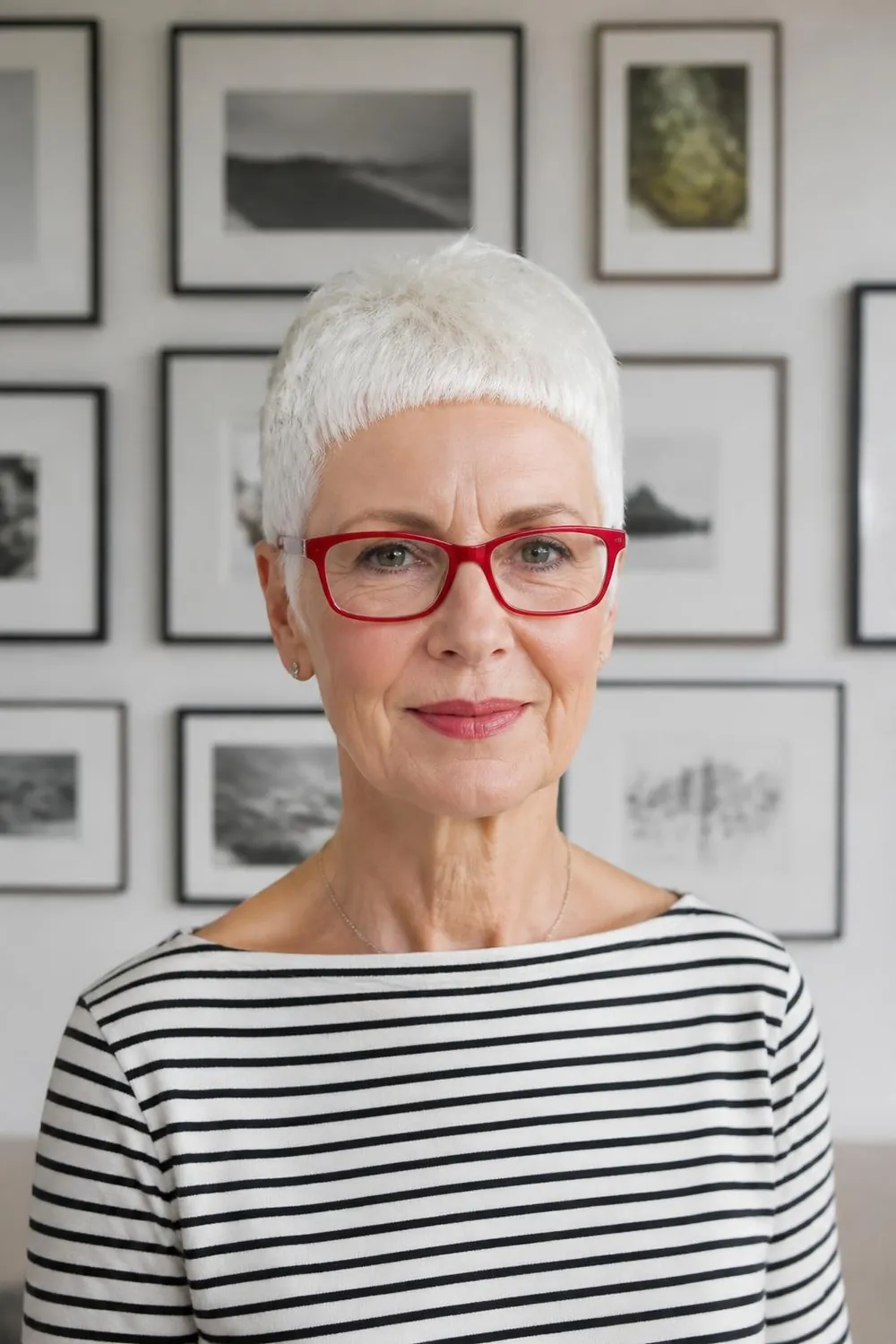
6. Short Tapered Cut With Baby Bangs
 Save
Baby bangs sit high on the forehead, often an inch or more above the brows. They are the boldest choice in the short group, and they look striking with bright white hair and strong frames.
A tapered nape and close sides keep the cut neat and graphic. Plan on a fringe trim every three weeks, since this short a fringe loses its line quickly.
Best for: confident dressers with straight or slightly wavy hair.
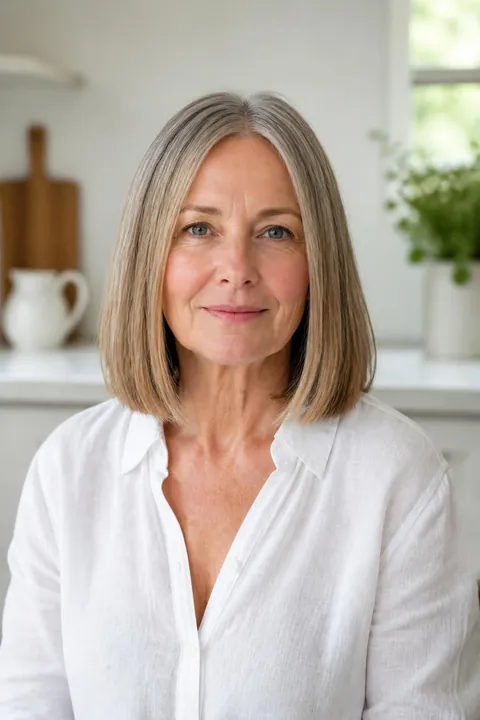
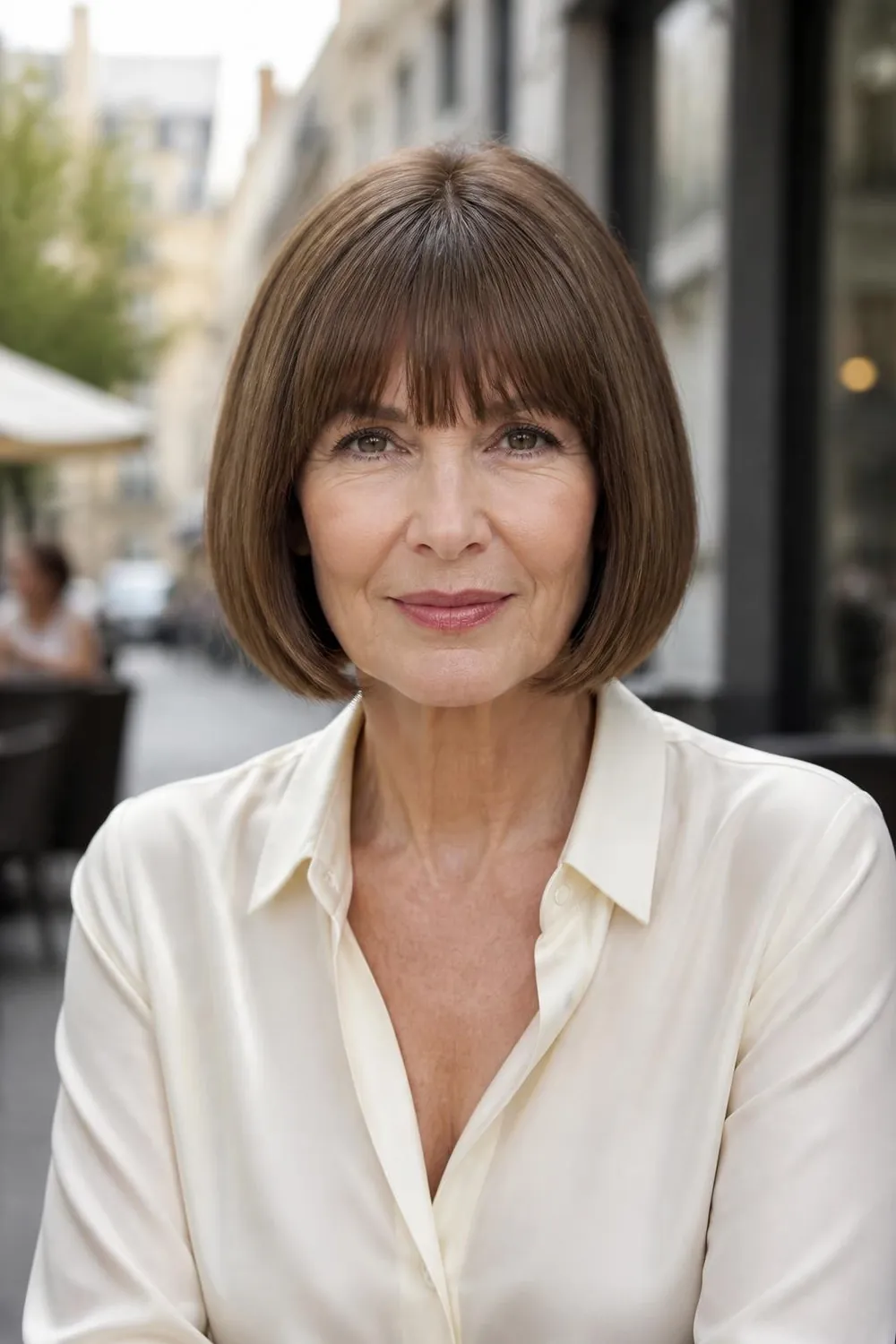
7. Classic Chin-Length Bob With Blunt Bangs
 Save
A blunt bob with matching bangs is crisp and polished. It works best on straight, thick hair that holds a clean edge without much product.
Keep the fringe at brow level and the bob right at the jaw. If your hair is fine, ask for a slightly softer edge on both so the lines don't look sparse.
Ask your stylist for: a one-length bob at the chin with a fringe cut straight across, just touching the brows.
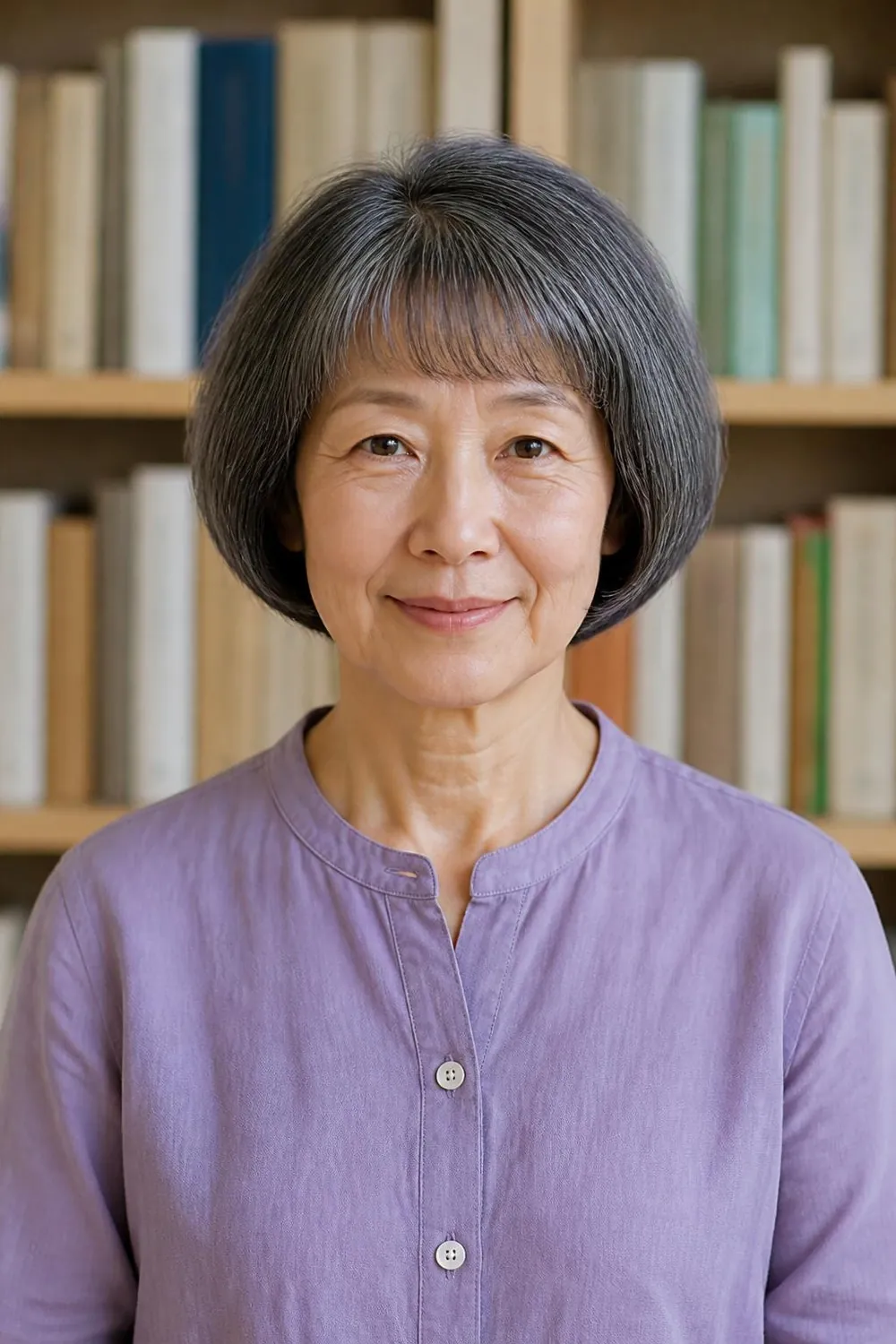
8. Smooth Bob With Curved Bangs
 Save
Curved bangs are shorter in the center and longer toward the temples. That gentle arch opens up the eyes and blends into the sides of a smooth, rounded bob.
Blow-dry the bob under with a large round brush. Dry the bangs downward first and sideways second, which stops the fringe from flipping up.
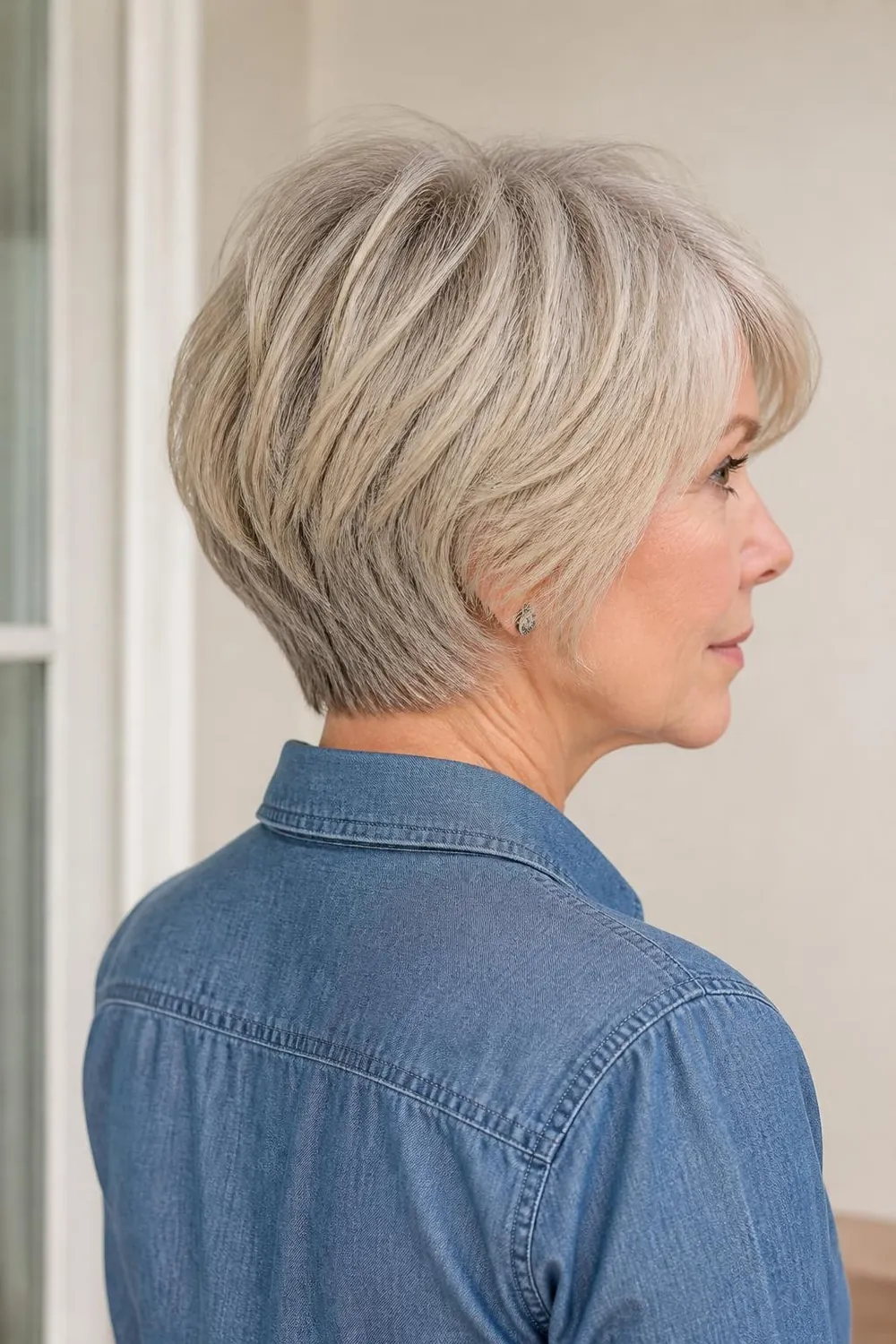
9. Stacked Bob With a Side Fringe
 Save
Stacking means short, graduated layers at the back of the head. They push the crown up, which helps when hair has thinned on top.
A side fringe softens the front and balances all that height at the back. Use a root-lift spray at the crown and a vent brush for a fast blow-dry.
Styling time: 6 to 8 minutes.
10. Wavy Bob With Tousled Bangs
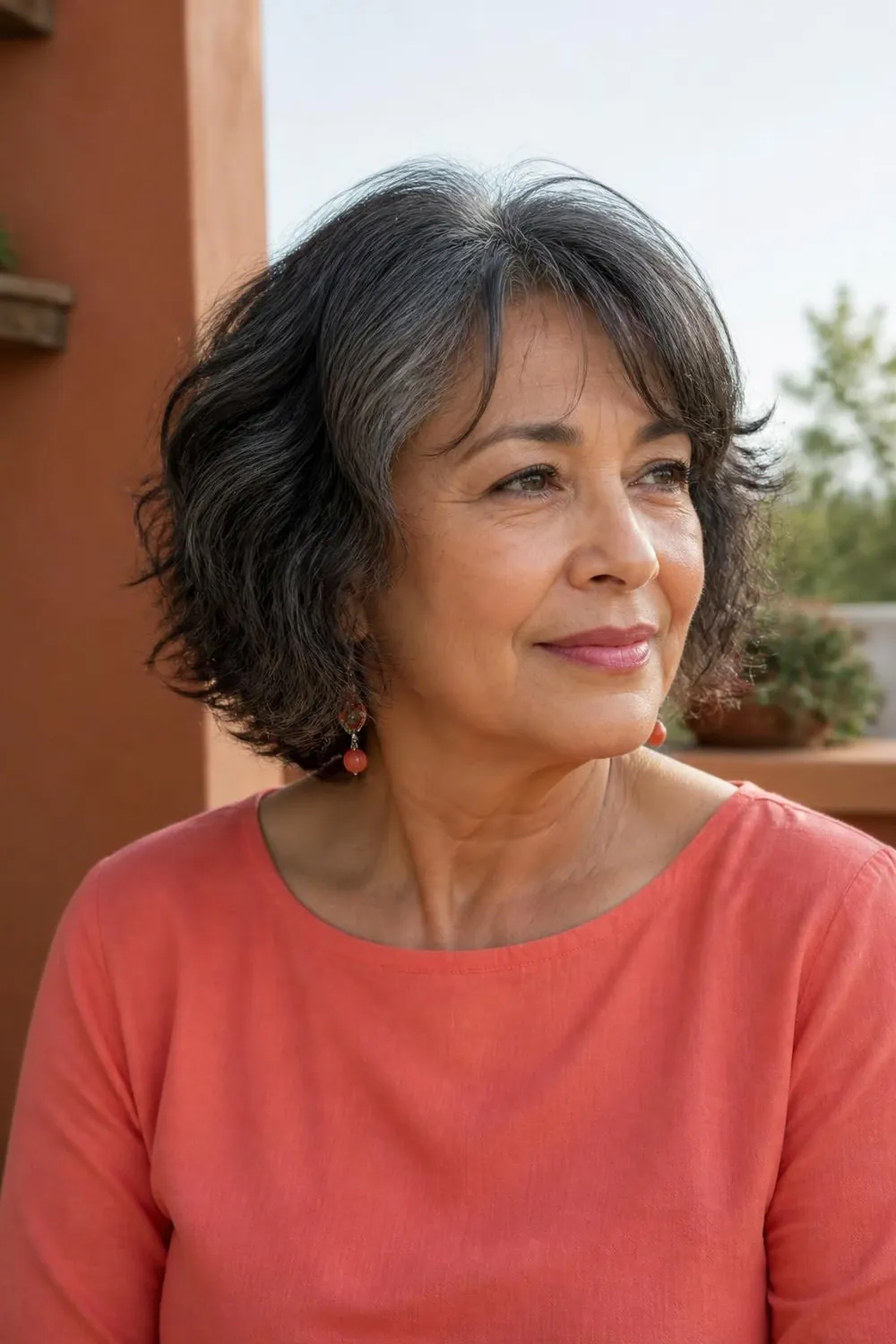 Save
If your hair has a natural bend, let it show. A jaw-length bob with long layers and loose, tousled bangs looks relaxed and takes almost no work.
Scrunch in a sea salt spray or light mousse, then air dry or use a diffuser on low. Twist the bangs around a finger while they are damp to guide the wave.
11. French Bob With Eyebrow Bangs
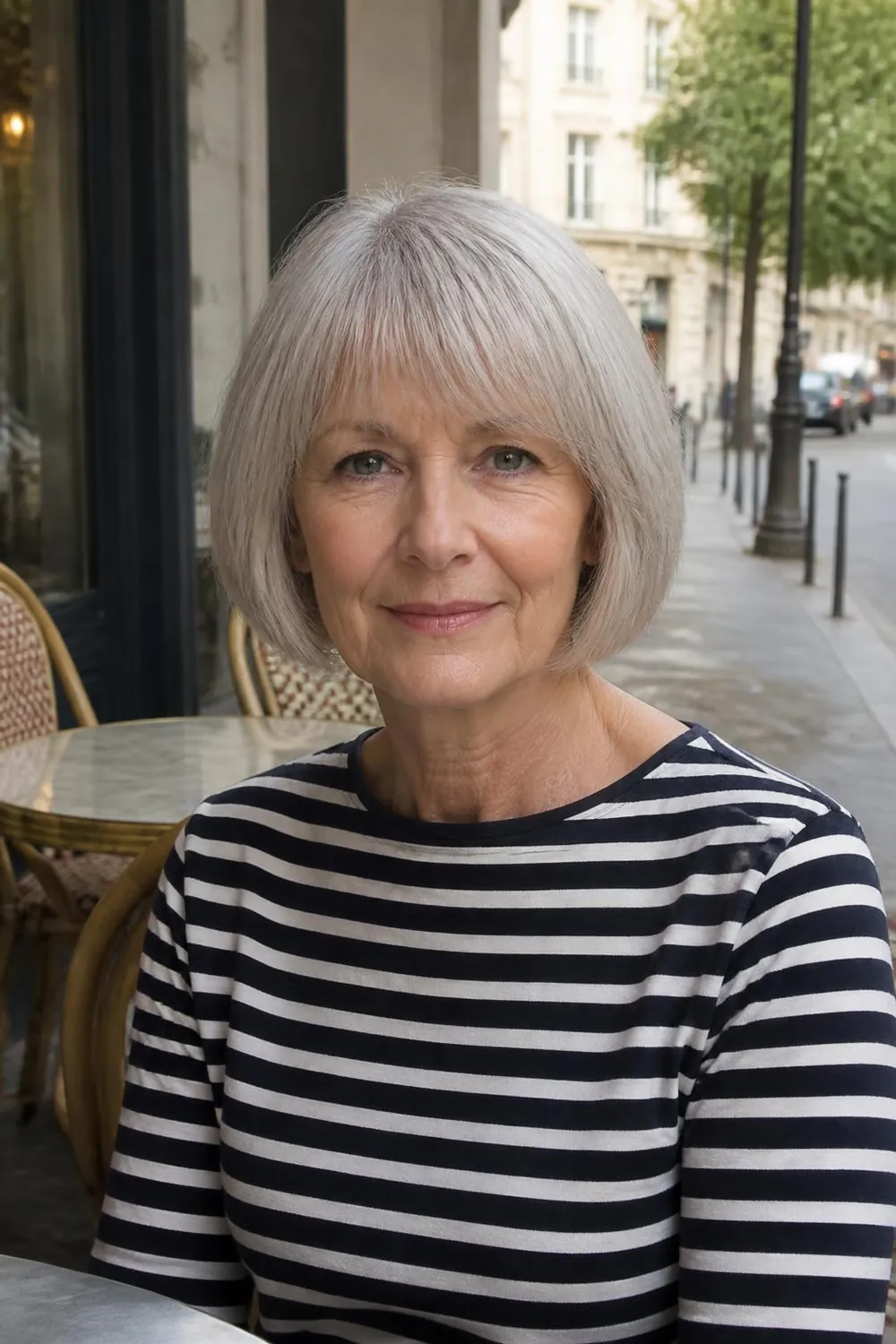 Save
The French bob sits between the jaw and the cheekbone, with a slightly undone edge. Paired with bangs that hit the eyebrows, it has a playful, artsy feel.
This cut wants a little texture, so put the flat iron away. Rub a texturizing cream between your palms and push it through the ends.
Best for: oval or heart-shaped faces and straight to wavy hair.
12. Shoulder-Length Shag With a Blended Fringe
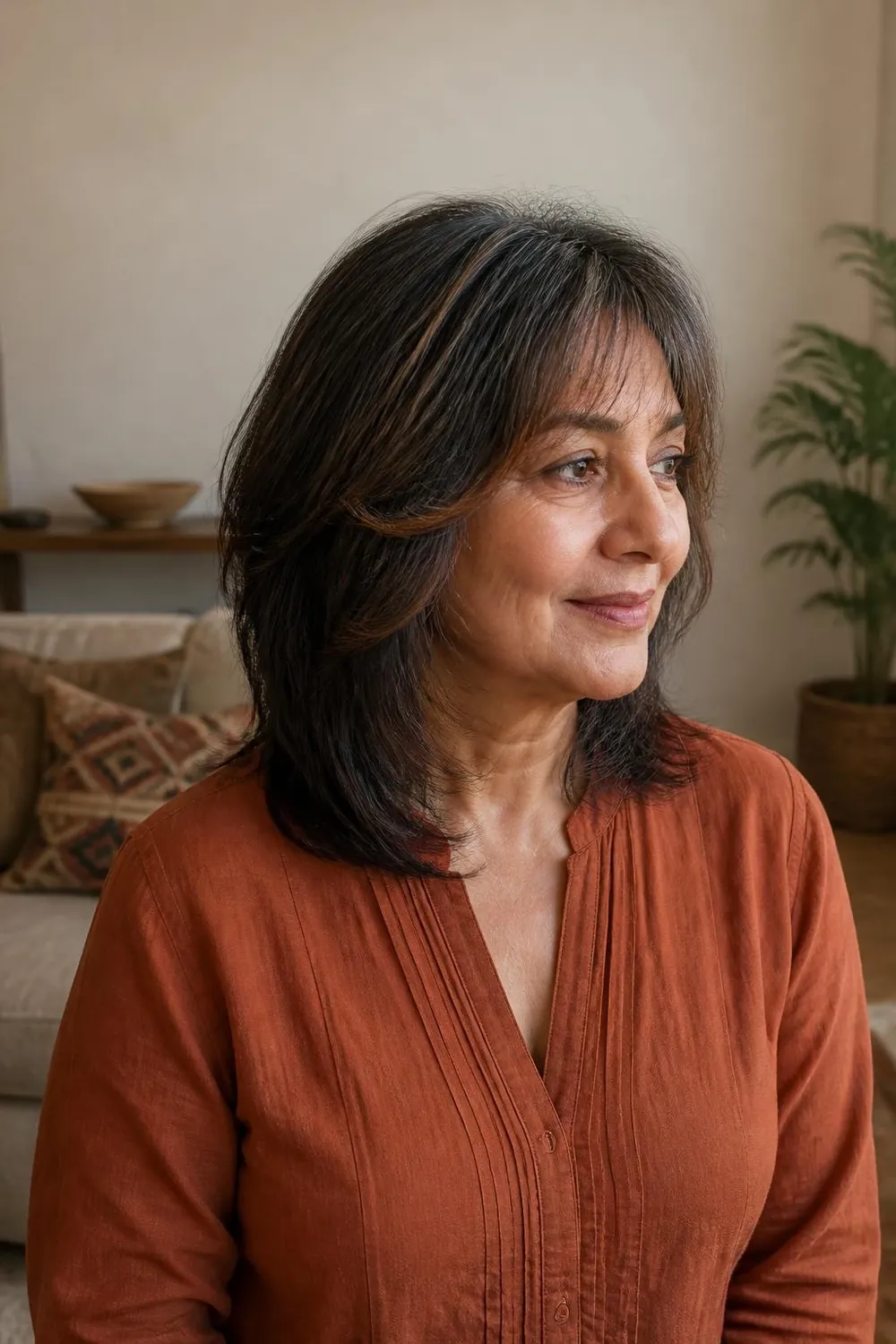 Save
A modern shag has plenty of layers that start around the cheekbones, plus a fringe that melts into them. Volume lands at the crown, and movement shows up around the face.
Few cuts add body to medium hair as easily. Dry it with your head tipped forward, then twist a few front pieces around a 1-inch iron.
13. Collarbone Cut With Bottleneck Bangs
 Save
Bottleneck bangs are narrow and short at the center, then widen and lengthen as they reach the cheeks. The outline resembles the neck of a bottle, and it frames the eyes and cheekbones at once.
They grow out gracefully into curtain bangs, which makes them a low-risk choice. Pair them with a collarbone-length cut and a few long layers.
14. A-Line Lob With Long Curtain Bangs
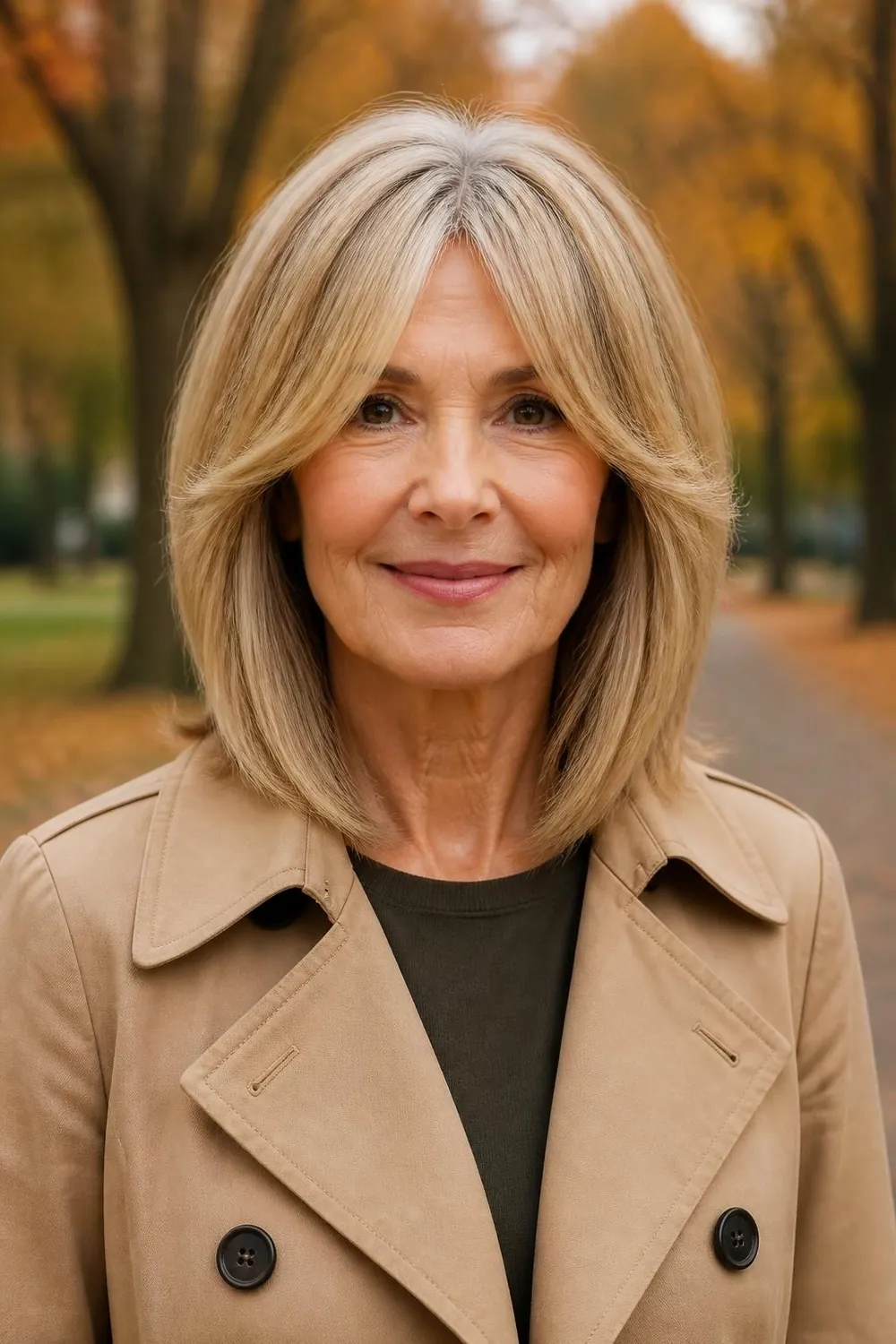 Save
An A-line lob is a touch longer in front than in back, so it angles toward the face. Long curtain bangs parted in the middle extend that line and soften the jaw.
Curtain bangs suit almost every face shape and texture. They are also the easiest fringe to grow out if you change your mind.
Stylist tip: blow-dry each half of the fringe away from your face over a round brush, then let it fall back. The bangs will swing open instead of hanging straight.
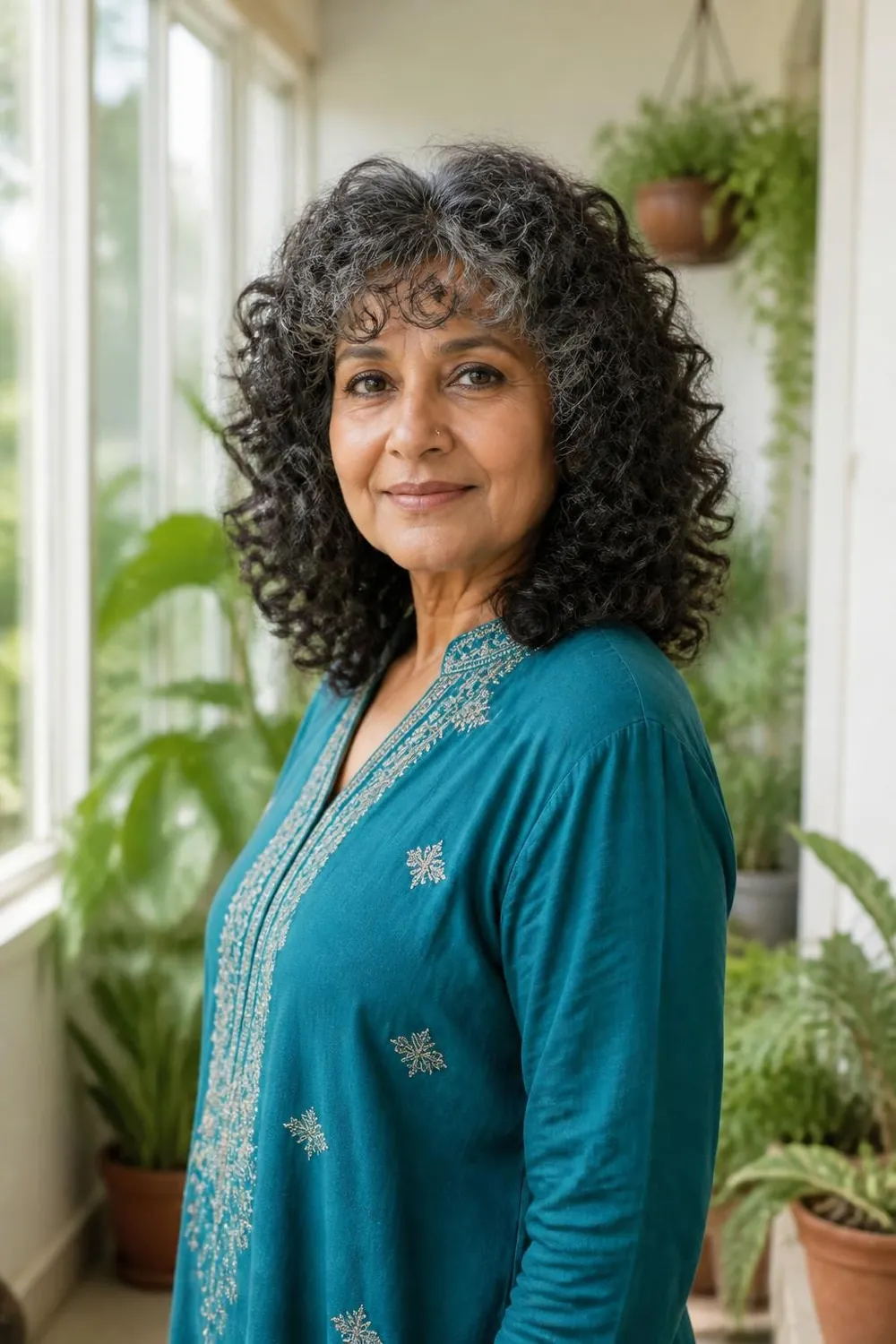
15. Mid-Length Curls With Spiral Bangs
 Save
Medium curls with a curly fringe look full and joyful. A rounded layering pattern, often called a curly shag, keeps the shape from turning into a triangle.
Apply a curl cream to soaking wet hair and scrunch. Diffuse on low heat, or let the curls air dry while you have your coffee.
Ask your stylist for: a dry cut with rounded layers and bangs left about 2 inches longer than the final length.
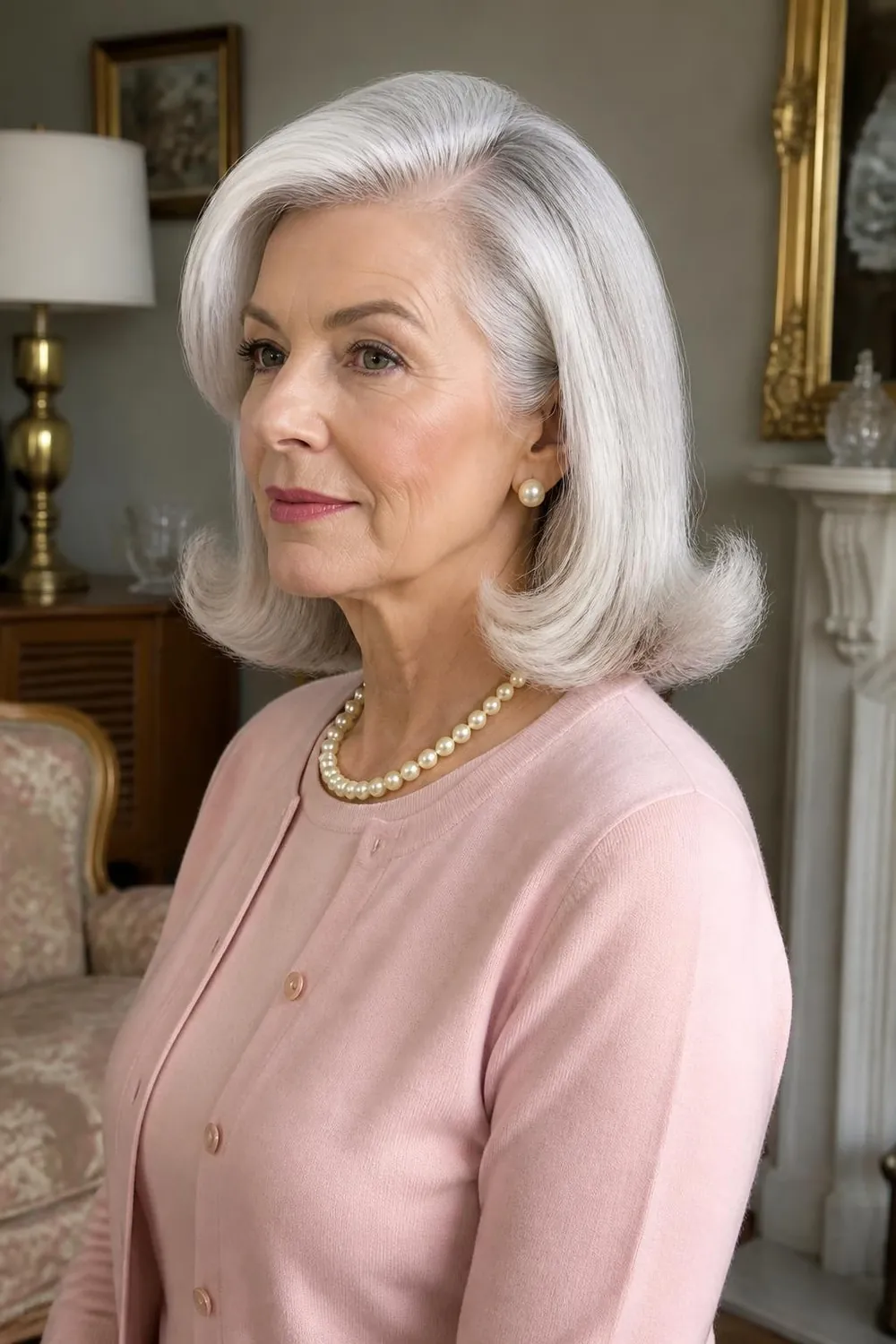
16. Retro Flip With Side-Parted Bangs
 Save
This one nods to the 1960s, with ends flipped out at the shoulder and a soft side-parted fringe. It looks polished for events and brings a little fun to everyday hair.
- Blow-dry the lengths smooth with a paddle brush.
- Roll the last 2 inches outward over a large round brush or a 1.5-inch hot roller.
- Sweep the bangs to the side and finish with a flexible spray.
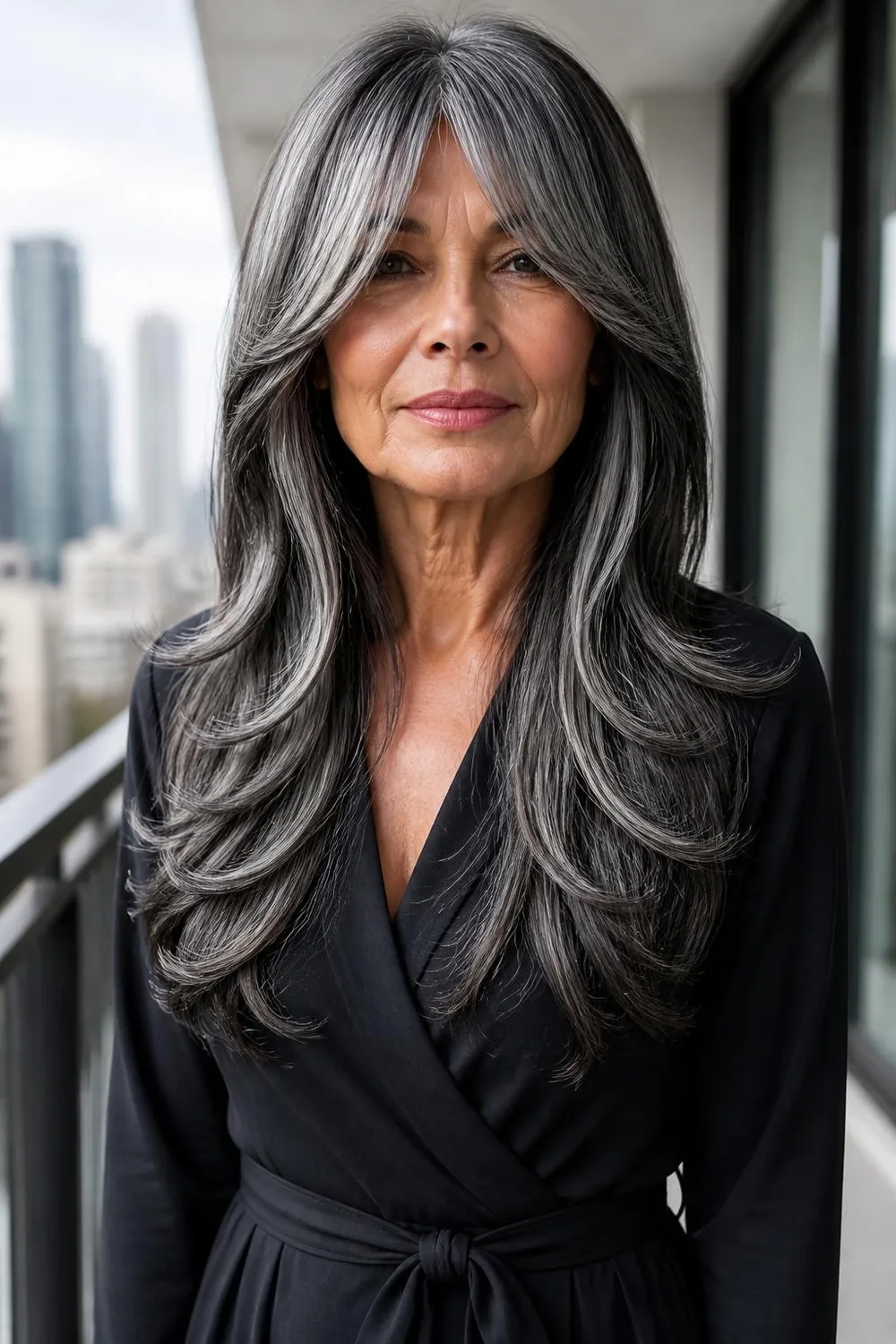
17. Long Layers With Bardot Bangs
 Save
Long hair after 60 can look fresh and current, and Bardot bangs help a lot. They are fuller than curtain bangs, parted slightly off center and long enough to sweep to the cheekbones.
Long layers starting at the chin keep the length from feeling heavy. A big round brush and five minutes give the fringe its signature swoop.
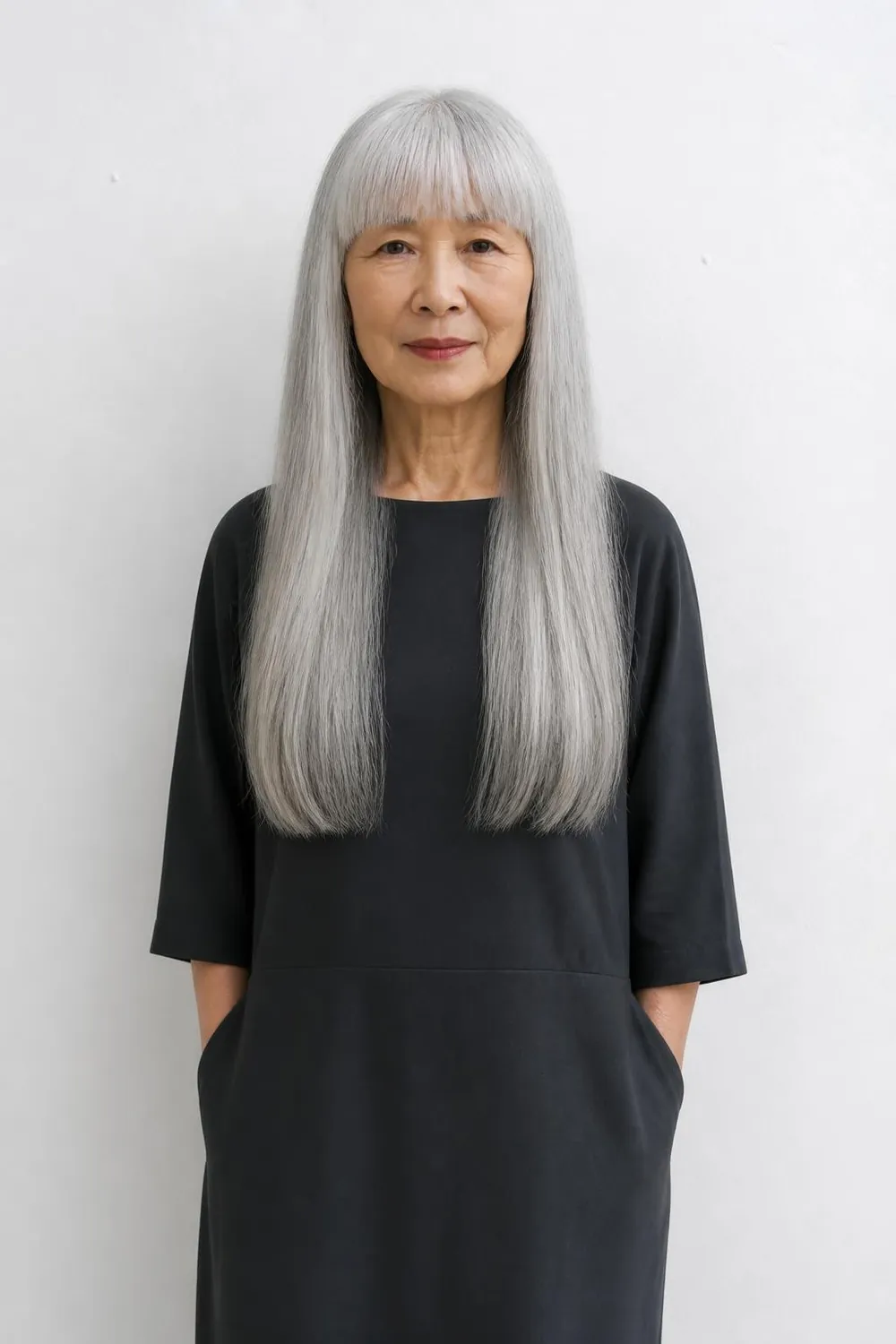
18. Long Straight Hair With a Full Fringe
 Save
Full, straight bangs with long, glossy hair make a strong graphic statement. The look works especially well on thick, straight hair that holds its shape.
Keep the ends healthy with a trim every 8 weeks, and use a shine serum on the lengths. A smoothing brush through the fringe each morning is enough.
Best for: straight, dense hair and anyone who loves a clean line.
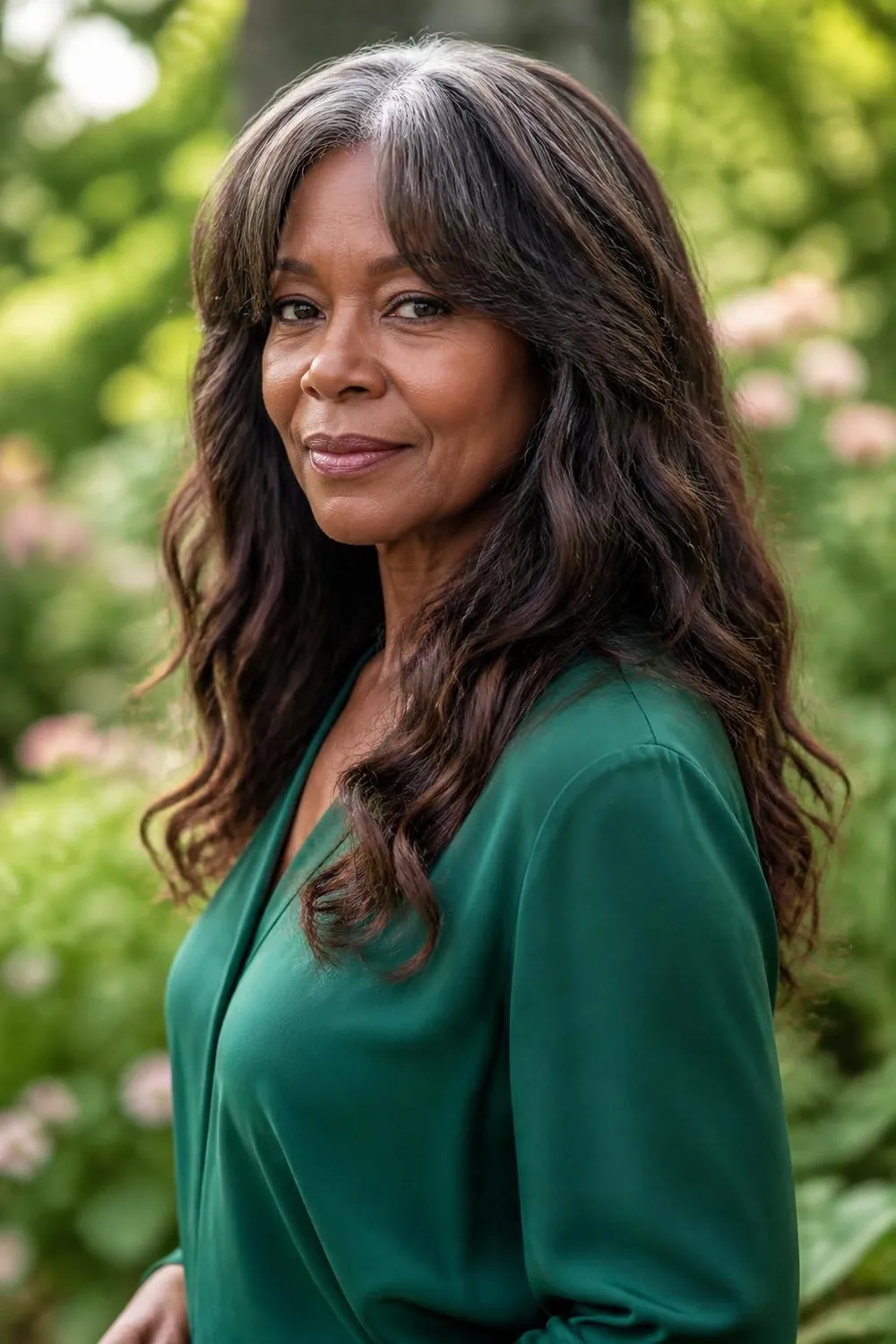
19. Long Waves With Cheekbone-Length Bangs
 Save
Cheekbone-length bangs are the longest fringe on this list. They blend into long waves and fall open at the center, so you get softness around the face without daily fuss.
Twist damp sections and let them air dry for loose waves. Once everything is dry, push the bangs back off your face with your fingers.
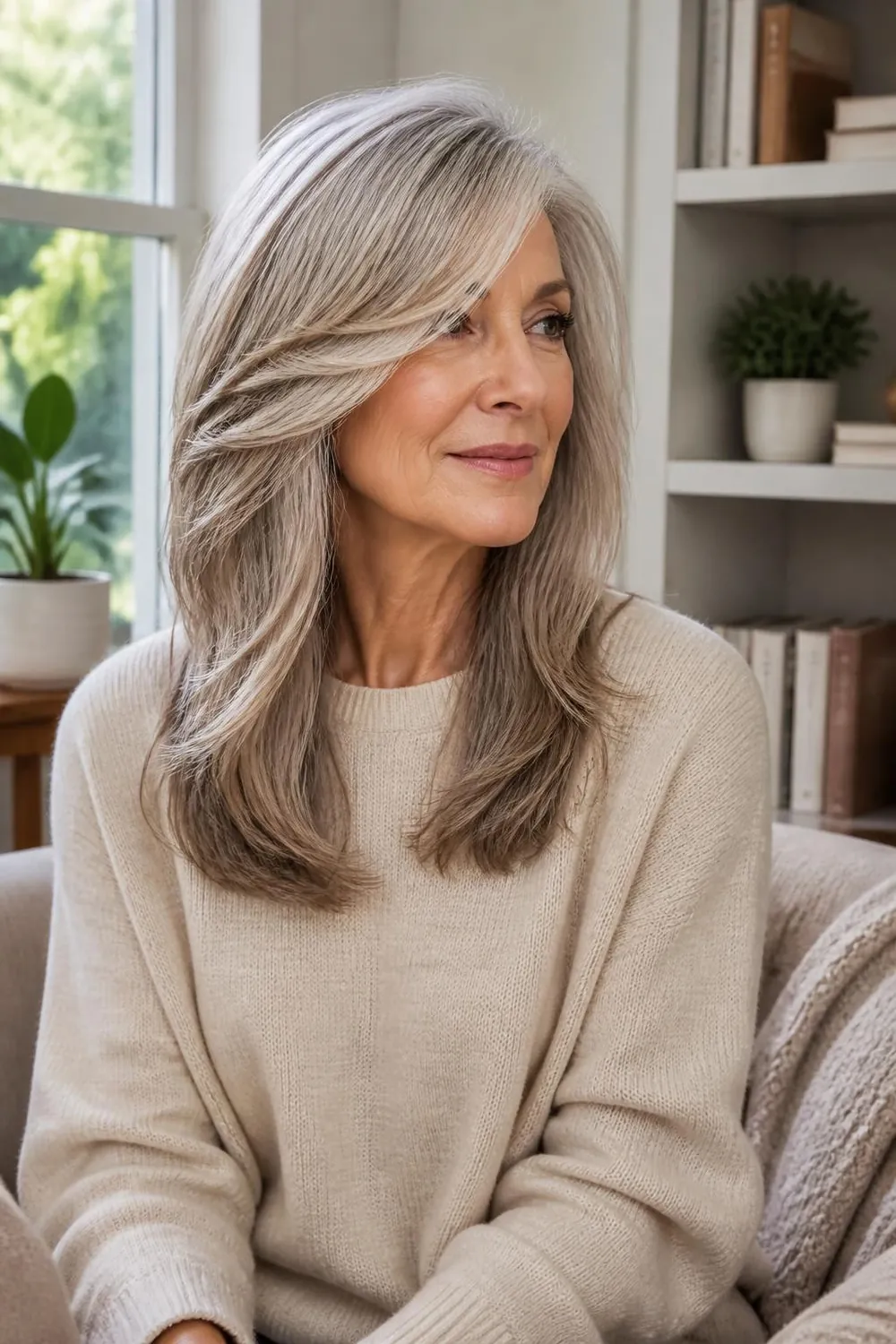
20. Long Cut With a Grown-Out Fringe
 Save
Growing out your bangs? Turn the awkward stage into a style. Ask your stylist to blend the old fringe into face-framing layers, then sweep it to one side with a deep part.
A small clip or a tuck behind the ear handles the in-between weeks. Within two or three months, the fringe becomes soft front layers.
Styling time: 2 minutes.
How to Keep Bangs Fresh Between Trims
- Wash only the fringe on day two. Bangs pick up oil from your forehead faster than the rest of your hair. Rinse them at the sink and blow-dry them alone.
- Dry them first. Bangs set within minutes, so shape them before anything else or they will dry in a strange direction.
- Leave the scissors to the salon. Trimming wet bangs at home usually leaves them too short once they dry.
Want ideas beyond bangs? Browse our full list of haircuts for women over 60, or go shorter with these short haircuts for women over 60.
Frequently asked questions
Should a 60 year old woman wear bangs?
Yes, if you like the look and can spare a few minutes for styling. Bangs soften the face, draw attention to the eyes and add fullness at a sparse hairline. Start with a longer side-swept or curtain fringe if you feel unsure.
Are bangs good for thin hair over 60?
Wispy or see-through bangs work well on thin hair because they add softness without borrowing much hair from the top. Heavy blunt bangs can leave the crown looking sparse. If you notice sudden thinning, check in with a dermatologist.
How do I wear bangs at 60 with a cowlick?
Pick a fringe that follows the direction your cowlick already pulls, usually to one side or split at the center. Blow-dry the fringe while it is soaking wet, brushing it left and right with a flat brush to relax the swirl, then smooth it into place.
How often should bangs be trimmed?
Every 3 to 4 weeks keeps most bangs at the right length. A quick fringe trim between full haircuts takes about ten minutes at most salons.
Do bangs work with glasses?
They do. Aim for a fringe that clears the top of the lenses by a hair, and go for an angled or split fringe if your frames are bold.